
|
Ogilbia galapagosensis (Poll & LeLeup, 1965) Galapagos cuskeel |
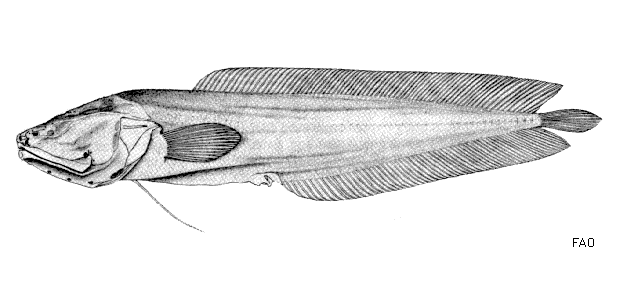
|
|
photo by
FAO |
| Family: | Dinematichthyidae (Viviparous brotula) | |||
| Max. size: | 5.8 cm SL (male/unsexed) | |||
| Environment: | demersal; freshwater; brackish | |||
| Distribution: | South America: Galapagos Islands. Apparently endemic to the fresh- and brackishwater of the cave systems on the Santa Cruz Island, where it is replaced by O. deroyi in the marine environment. | |||
| Diagnosis: | Dorsal soft rays (total): 69-74; Anal soft rays: 54-62. This species has the following characters: Dorsal fin rays 69-76, anal fin rays 54-62; outer pseudoclasper with a long spine-like supporter; inner pseudoclasper very short, anteriorly inclined; opercular spine with a single, sharp tip; cheeks naked; body not pigmented; upper preopercular pore absent; caudal fin rays 11-12 (Ref. 57883). | |||
| Biology: | Uncommon species (Ref. 34024). Inhabits rocky crevices; cave species (Ref. 27297). | |||
| IUCN Red List Status: | Endangered (EN); Date assessed: 13 September 2022 (B1ab(iii)+2ab(iii)) Ref. (130435) | |||
| Threat to humans: | harmless | |||