>
Cypriniformes (Carps) >
Cyprinidae (Minnows or carps) > Barbinae
Etymology: Barbus: Latin, barbus = barbel (Ref. 45335).
Eponymy: Sir Charles Alfred Payton (1843–1926) was a British adventurer, writer, fisherman and diplomat who was British Consul to Morocco, where this barb is found. [...] (Ref. 128868), visit book page.
البيئة: الوسط / المنطقة المناخية / نطاق العمق / نطاق التوزيع
البيئة
; المياه العذبة قاعية التغذية و المعيشة. Temperate
Europe: Tisza system (Danube drainage), from Hron to Someş sub-systems, occasionally reaching to eastern Austria; upper Vistula drainage in Slovakia and Poland; Wierzyca system (lower Vistula drainage, Poland); upper Dniestr drainage in Poland and Ukraine.
الطول عند النضج الأول / الحجم / وزن / العمر
النضج: Lm 12.5, range 11 - 14 cm
Max length : 27.0 cm SL ذكر/ مختلط الجنس; (Ref. 59043)
وصف مختصر
مفاتيح التعريف | الوصف الخارجي | قياسات المظهر الخارجي
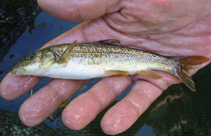
Differs from its congeners in Danube drainage and northern central Europe by having the following characters: last simple dorsal ray weak, not serrated posteriorly, segmented on its entire length; lower lip thick, with a median lobe; 8-11 scale rows between lateral line and dorsal origin; 8-9 rows of scales between lateral line and pelvic origin; top of head plain; cheek and opercle unspotted or with very few small spots; paired fins unspotted, rays unpigmented or with few dark pigments not forming dark bars; body plain with faint dots and blotches slightly darker than background; caudal fin unspotted or with spots smaller than pupil diameter. However, these characters may be of little use when differentiating this species from Barbus balcanicus and Barbus petenyi in the field as identification of Barbus carpathicus is based mainly on mtDNA characters (Ref. 59043).
Body shape (shape guide): elongated.
Inhabits fast to moderate flowing premontane and montane streams and small rivers with gravel bottom. Most abundantly found in shallow rapids and riffles during summer and moves to deeper places in winter. Larvae and juveniles live on the bottom in very shallow shoreline habitats and leave the shores for faster-flowing waters as they grow. Feeds on a wide variety of benthic vertebrates and algae. Spawns in fast-flowing water (0.8-1 m/s) of shallow riffles with depth 0.5-0.8 m (Ref. 59043).
دورة الحياة وسلوك التزاوج
النضج | التكاثر | وضع البيض | بيض | الخصوبة | اليرقات
Kottelat, M. and J. Freyhof, 2007. Handbook of European freshwater fishes. Publications Kottelat, Cornol and Freyhof, Berlin. 646 pp. (Ref. 59043)
حالة القائمة الحمراء للاتحاد الدولي لحفظ الطبيعة والموارد الطبيعية (Ref. 130435: Version 2025-2 (Global))
استخدامات بشرية
مصائد: غير ذات اهمية
أدوات
تقارير خاصة
تنزيل XML
مصادر علي الأنترنت
تقديرات تستند إلى النماذج
مؤشر التنوع الشُعبي الوراثي (مرجع
82804): PD
50 = 0.5000 [Uniqueness, from 0.5 = low to 2.0 = high].
Bayesian length-weight: a=0.00832 (0.00536 - 0.01290), b=3.05 (2.92 - 3.18), in cm total length, based on LWR estimates for this species & Genus-body shape (Ref.
93245).
مستوى غذائي (مرجع
69278): 3.1 ±0.4 se; based on size and trophs of closest relatives
المرونه (مرجع
120179): وسيط, الحد الزمني الأدني لتضاعف عدد أفراد المجتمع 1.4-4.4 سنة (Preliminary K or Fecundity.).
ضعف الصيد (Ref.
59153): Low vulnerability (23 of 100).
🛈