Elasmobranchi (squali e razze) (sharks and rays) >
Carcharhiniformes (Ground sharks) >
Pentanchidae (Deepwater catsharks)
Etymology: Halaelurus: halos (Gr.), sea; ailouros (Gr.), cat, probably an allusion to the vernacular “catshark,” so named for its cat-like eyes (See ETYFish); boesemani: In honor of Marinus Boeseman (1916-2006), curator of fishes at the Rijksmuseum van Natuurlijke Historie (Leiden, Netherlands), for his “important” contributions to ichthyology (See ETYFish).
Eponymy: Dr Marinus Boeseman (1916–2006) was a Dutch ichthyologist, working in the Department of Zoology, Rijksmuseum van Natuurlijke Histoire, Leiden, becoming Curator of Fishes (1947–1981). [...] (Ref. 128868), visit book page.
Ambiente: milieu / zona climatica / distribuzione batimetrica / gamma di distribuzione
Ecologia
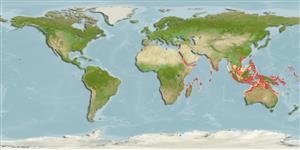
marino demersale; distribuzione batimetrica 37 - 250 m (Ref. 6871). Deep-water; 21°N - 26°S
Western Indian Ocean: Somalia, Gulf of Aden and Kenya.
Lunghezza alla prima maturità / Dimensione / Peso / Età
Maturità: Lm ?, range 35 - ? cm
Max length : 48.0 cm TL maschio/sesso non determinato; (Ref. 244); 47.0 cm TL (female)
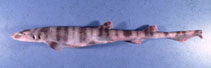
Spine dorsali (totale) : 0; Spine anali: 0. Dark spots small and very numerous, usually not larger than spiracles, over or between weak saddles or bars (Ref. 11146).
Body shape (shape guide): elongated.
A little-known but wide-ranging bottom-dwelling shark found on continental and insular shelves (Ref. 11146). Probably caught with bottom trawls (Ref. 30573). Live-bearing (Ref. 50449).
Ciclo vitale e comportamento di accoppiamento
Maturità | Riproduzione | Deposizione | Uova | Fecondità | Larve
Up to 4 egg capsules may be found in an oviduct but it is uncertain whether these hatch inside the oviduct or if the eggs are laid (Ref. 244). Live-bearing (Ref. 50449).
Compagno, L.J.V., 1984. FAO Species Catalogue. Vol. 4. Sharks of the world. An annotated and illustrated catalogue of shark species known to date. Part 2 - Carcharhiniformes. FAO Fish. Synop. 125(4/2):251-655. Rome: FAO. (Ref. 244)
Stato della Lista Rossa IUCN (Ref. 130435: Version 2025-2 (Global))
Usi umani
Pesca: scarso interesse commerciale
Strumenti
Rapporti speciali
Scarica XML
Fonti Internet
Stime basate su modelli
Temperatura preferita (Fonte Biblio.
123201): 19.6 - 27.9, mean 25 °C (based on 441 cells).
Indice di diversità filogenetica (Fonte Biblio.
82804): PD
50 = 0.5078 [Uniqueness, from 0.5 = low to 2.0 = high].
Bayesian length-weight: a=0.00347 (0.00172 - 0.00698), b=3.08 (2.90 - 3.26), in cm total length, based on LWR estimates for this (Sub)family-body shape (Ref.
93245).
Livello trofico (Fonte Biblio.
69278): 4.3 ±0.5 se; based on size and trophs of closest relatives
Resilienza (Fonte Biblio.
120179): Basso, tempo minimo di raddoppiamento della popolazione 4.5 - 14 anni (Fec assumed to be <100).
Vulnerabilità della pesca (Ref.
59153): Moderate vulnerability (38 of 100).
🛈