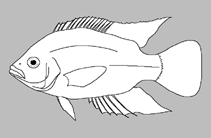
>
Cichliformes (Cichlids, convict blennies) >
Cichlidae (Cichlids) > Pseudocrenilabrinae
Etymology: Pseudotropheus: Greek, pseudes = false + Greek, tropaion = defeat, a memorial of a fighting war, trophy; because of their specialized teeth were such an obvious feeding adaptation (Ref. 45335).
More on author: Trewavas.
Ambiente: milieu / zona climática / intervalo de profundidade / gama de distribuição
Ecologia
; Água doce demersal; intervalo de profundidade 6 - 76 m. Tropical; 24°C - 26°C (Ref. 13614); 12°S - 15°S
Tamanho / Peso / Idade
Maturidade: Lm ? range ? - ? cm
Max length : 13.2 cm SL macho/indeterminado; (Ref. 5684)
Descrição breve
Chaves de identificação | Morfologia | Morfometria
Espinhos dorsais (total) : 17 - 19; Raios dorsais moles (total) : 8 - 9; Espinhos anais: 3; Raios anais moles: 8 - 9. Diagnosis: This species is distinguished from all other members in Pseudotropheus, except P. williamsi, by a pale yellow to hyaline dorsal fin and by the absence of distinct vertical bars below the dorsal fin; most species of Pseudotropheus either have distinct bars below the dorsal fin or a dorsal fin with black pigment (Ref. 119458). It is distinguished from P. williamsi by the absence of two horizontal lines of black dots on the flank (Ref. 119458).
Body shape (shape guide): fusiform / normal.
In some places, this species commonly inhabits open sandy areas which are usually below 10 m (Ref. 6256 mentions samples caught in trawls from 6-76 meters). It feeds by picking invertebrates from the silty layer that covers the sand in many places (Ref. 5595).
Ciclo de vida e comportamento de acasalamento
Maturidade | Reprodução | Desova | Ovos | Fecundidade | Larvas
Stauffer, J.R. Jr., A.F. Konings and T.M. Ryan, 2016. Redescription of Pseudotropheus livingstonii and Pseudotropheus elegans from Lake Malawi, Africa. Zootaxa 4154(2):169-178. (Ref. 119458)
Categoria na Lista Vermelha da IUCN (Ref. 130435: Version 2025-2 (Global))
Ameaça para o homem
Harmless
Utilização humana
Aquário: Espécies comerciais
Ferramentas
Relatórios especiais
Descarregue XML
Fontes da internet
Estimativas baseadas em modelos
Índice de diversidade filogenética (Ref.
82804): PD
50 = 0.5000 [Uniqueness, from 0.5 = low to 2.0 = high].
Bayesian length-weight: a=0.00389 (0.00180 - 0.00842), b=3.12 (2.94 - 3.30), in cm total length, based on all LWR estimates for this body shape (Ref.
93245).
Nível Trófico (Ref.
69278): 4.0 ±0.0 se; based on diet studies.
Resiliência (Ref.
120179): Elevada, tempo mínimo de duplicação da população menor que 15 meses (Preliminary K or Fecundity.).
Vulnerabilidade da pesca (Ref.
59153): Low vulnerability (10 of 100).
🛈