分類 / 名前
共通名の | 類義語 | Catalog of Fishes(部類, 種) | ITIS | CoL | WoRMS | Cloffa
環境:環境 / 気候帯 / 深さの範囲 / 分布範囲
生態学
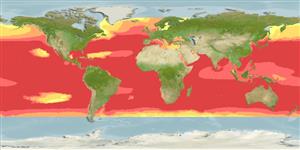
海 pelagic-oceanic; 海洋回遊性 (Ref. 71039); 深さの範囲 0 - 2878 m (Ref. 116993), usually 0 - 550 m (Ref. 54934). Temperate; 5°C - 27°C (Ref. 43); 69°N - 50°S, 180°W - 180°E (Ref. 54934)
Atlantic, Indian and Pacific: tropical and temperate and sometimes cold waters, including the Mediterranean Sea, the Sea of Marmara, the Black Sea, and the Sea of Azov. Highly migratory species. Mt DNA restriction analysis reveal that genetic differentiation occurs between populations inhabiting the Mediterranean Sea and the tropical Atlantic ocean, indicating little genetic exchange occurring between the two (Ref. 12784).
初回成熟時の長さ / サイズ / 重さ / 年齢
成熟: Lm 212.0, range 156 - 250 cm
Max length : 455 cm FL オス/雌雄の選別がない; (Ref. 40637); common length : 300 cm TL オス/雌雄の選別がない; (Ref. 9354); 最大公表体重: 650.0 kg (Ref. 4689)
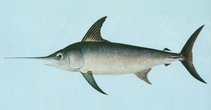
背面の脊椎 (合計) : 0; 背鰭 (合計) : 38 - 56; 肛門の骨: 0; 臀鰭: 16 - 18. Blackish-brown fading to light-brown below; 1st dorsal fin with blackish-brown membrane, other fins brown or blackish-brown (Ref. 43). A long, flat, sword-like bill and no pelvic fins (Ref. 26938).
Body shape (shape guide): elongated.
Oceanic but sometimes found in coastal waters (Ref. 9354). Generally above the thermocline (Ref. 9354), preferring temperatures of 18°C to 22°C (Ref. 9987). Larvae are frequently encountered at temperatures above 24 °C (Ref. 9702). Migrate toward temperate or cold waters in the summer and back to warm waters in the fall. Adults are opportunistic feeders, known to forage for their food from the surface to the bottom over a wide depth range (Ref. 9702). Feed mainly on fishes (Atlantic mackerel, barracudinas, silver hake, redfish, herring and lanternfishes (Ref. 5951); also on crustaceans and squids (Ref. 9354). They use their sword to kill their prey (Ref. 9354). Large individuals may accumulate large percentages of mercury in its flesh (Ref. 9354). Are batch spawners (Ref. 51846). Spawning takes place in Atlantic during spring in southern Sargasso Sea. Migrate to cooler waters to feed (Ref. 4689). Females grow fastest. Determination of age is difficult since the otoliths are very small and scales are missing in adults. Year rings have been successfully counted on cross sections of the fin rays (Ref. 35388). Pelagic eggs measure 1.6-1.8mm and the newly hatched larvae is 4 mm long. Sword is well developed at a length of 10mm and young live pelagically in the upper water layers where they quickly develop into very voracious predators (Ref. 35388). Mt DNA restriction analysis reveal that genetic differentiation occurs between populations inhabiting the Mediterranean Sea and the tropical Atlantic ocean, indicating little genetic exchange occurring between the two (Ref. 12784). Good food fish, marketed fresh or frozen, and can be made into sashimi, teriyaki or fillets (Ref. 9354).
ライフサイクルと交尾行動
成熟 | 繁殖 | 放精 | 卵 | 生産力 | 幼生
In the Atlantic Ocean, spawning occurs in the upper water layer at depths between 0 and 75 m, at temperatures around 23°C, and salinity of 33.8 to 37.4 ppt.
The distribution of larval broadbill swordfish in the Pacific Ocean indicates that spawning occurs mainly in waters with a temperature of 24°C or more. Spawning appears to occur in all seasons in equatorial waters, but is restricted to spring and summer at higher latitudes (Ref. 30448).
Fertilisation in broadbill swordfish is external and pairing of solitary males and females is thought to occur when spawning (Ref. 9742). Broadbill swordfish are reported to spawn in the upper layers of the water column, from the surface to a depth of 75 m (Ref. 43).
Estimates of egg numbers vary considerably, from 1 million to 16 million in 168,000 g female (Ref. 9742) and 29 million in a 272,000 g female (Ref. 30372).
Nakamura, I., 1985. FAO species catalogue. Vol. 5. Billfishes of the world. An annotated and illustrated catalogue of marlins, sailfishes, spearfishes and swordfishes known to date. FAO Fish. Synop. 125(5):65p. Rome: FAO. (Ref. 43)
IUCNのレッドリストの状況は (Ref. 130435: Version 2025-2 (Global))
人間の用途
水産業: 商業; ゲームフィッシュ: はい
用具
特記事項
XMLをダウンロードして下さい
インターネットの情報源
モデルに基づく推定値
好ましい温度 (参照
123201): 10.9 - 27.6, mean 22.7 °C (based on 5276 cells).
系統多様性指数 (参照
82804): PD
50 = 1.5000 [Uniqueness, from 0.5 = low to 2.0 = high].
Bayesian length-weight: a=0.00380 (0.00161 - 0.00900), b=3.15 (2.93 - 3.37), in cm total length, based on LWR estimates for this (Sub)family-body shape (Ref.
93245).
栄養段階 (参照
69278): 4.5 ±0.2 se; based on diet studies.
Generation time: 8.9 (6.1 - 13.7) years. Estimated as median ln(3)/K based on 11
growth studies.
回復力 (参照
120179): 手段, 1.4年~4.4年の倍増期間の最小個体群 (rm=0.076; K=0.23; tm=5-6; tmax=9).
Prior r = 0.46, 95% CL = 0.30 - 0.69, Based on 17 full stock assessments.
漁業の脆弱性 (Ref.
59153): High to very high vulnerability (72 of 100).
🛈
気候脆弱性 (Ref.
125649): Moderate vulnerability (43 of 100).
🛈
栄養素 (Ref.
124155): Calcium = 9 [4, 16] mg/100g; Iron = 0.278 [0.142, 0.491] mg/100g; Protein = 19.3 [17.0, 22.1] %; Omega3 = 0.333 [0.155, 0.694] g/100g; Selenium = 44.1 [17.4, 121.6] μg/100g; VitaminA = 5.71 [1.63, 20.67] μg/100g; Zinc = 0.443 [0.157, 0.783] mg/100g (wet weight); based on
nutrient studies.