(كوسه ها و سپرماهيان) (sharks and rays) >
Torpediniformes (Electric rays) >
Narcinidae (Numbfishes)
Etymology: Benthobatis: Greek, benthos = depth of the sea + Greek, batis, -idos = a ray (Raja sp.) (Ref. 45335); marcida: From its loose skin and soft aspect ['marcidus' = withered or wasted].
محیط زیست: محیط زیست / منطقه آب و هوایی / تغييرات عمق / محدوده توزیع
بوم شناسي
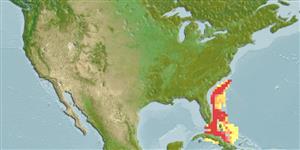
دريايي موجوداتی که در اعماق زیر 200 متر زندگی و تغذیه می کنند; تغييرات عمق 200 - 923 m (Ref. 48493). Deep-water; 34°N - 21°N, 82°W - 74°W (Ref. 114953)
Western Central Atlantic. South Carolina, USA to northern Cuba.
اندازه / وزن / سن
بلوغ: Lm ? range ? - ? cm
Max length : 50.0 cm WD جنس نر / بدون خواص جنسي; (Ref. 26340)
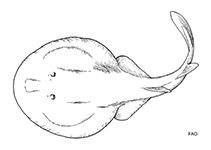
Narrow protractile mouth. Caudal is oval shape. Greater length of head anterior to spiracles, union of margins of its pelvic fins to their tips with the sides of the tail. Soft body and skin (Ref. 6902). Light brown to yellowish-brown dorsal color pattern; white to yellowish-white ventral color pattern, sometimes with distinct yellow markings on posterior ventral disc surface, ventral pelvic fin area, and around mouth. Caudal fin length much less than 1/2 length of tail, roughly equal to 1/5 length of tail; relatively more pronounced upper and lower lobes with lower strongly convex. Distance between dorsal and caudal fins about equal to distance between first and second dorsal fins. Snout relatively short, generally less than 1/3 in disc-length (24% of disc length in 43.5 cm TL female, 25% in 48.5 cm TL), but never much greater than 1/3 as in B. moresbyi (ca 40% in lectotype); disc more rounded, not as elongated as in B. moresbyi (Ref. 48493).
Body shape (shape guide): other.
Inhabits neritic waters, on sandy bottoms (Ref. 557). Found on continental and insular slopes at 250-1,000 m depths; adults apparently at greatest depths (Ref. 114953). Solitary. Tiny eyes are covered with skin so that the species is blind (Ref. 557). Feeds on marine invertebrates. Both ovaries are functional in an adult female, with numerous small oocytes of ca. 2 mm in thin-walled uteri. Maturity size of males at ca. 16 cm TL; birth size at 8-9 cm TL (Ref. 114953).
چرخه زندگی و رفتار جفتگیری
بلوغ | تولید مثل | تخم ریزی | تخم ها | باروری | توزاد ( لارو)
Claro, R., 1994. Características generales de la ictiofauna. p. 55-70. In R. Claro (ed.) Ecología de los peces marinos de Cuba. Instituto de Oceanología Academia de Ciencias de Cuba and Centro de Investigaciones de Quintana Roo. (Ref. 26340)
وضعيت در فهرست قرمز IUCN (Ref. 130435: Version 2025-2 (Global))
استفاده انسانی
ماهي گيري – شيلات: از بی علاقه گی
ابزارها
گزارش های ويژه
بارگيری XML
منابع اينترنتي
تخمینها بر اساس مدلها
دمای ترجیحی (مرجع
123201): 8.8 - 18.2, mean 13 °C (based on 77 cells).
شاخص تنوع فیلوژنتیکی (مرجع
82804): PD
50 = 0.5625 [Uniqueness, from 0.5 = low to 2.0 = high].
Bayesian length-weight: a=0.01175 (0.00470 - 0.02937), b=2.88 (2.66 - 3.10), in cm total length, based on LWR estimates for this (Sub)family-body shape (Ref.
93245).
سطح تروفیک (مرجع
69278): 3.2 ±0.4 se; based on size and trophs of closest relatives
جهندگی (مرجع
120179): پايين ، كم, كمينه زمان لازم براي دو برابر شدن جمعيت 5/4 – 14 سال (Assuming fecundity<100).
آسیبپذیری ماهیگیری (Ref.
59153): Low vulnerability (20 of 100).
🛈