أشلاق (القروش و الشفانين) (sharks and rays) >
Torpediniformes (Electric rays) >
Narcinidae (Numbfishes)
Etymology: Benthobatis: Greek, benthos = depth of the sea + Greek, batis, -idos = a ray (Raja sp.) (Ref. 45335); marcida: From its loose skin and soft aspect ['marcidus' = withered or wasted].
البيئة: الوسط / المنطقة المناخية / نطاق العمق / نطاق التوزيع
البيئة
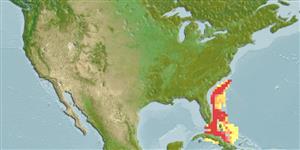
بحري قاعية المعيشة; نطاق العمق 200 - 923 m (Ref. 48493). Deep-water; 34°N - 21°N, 82°W - 74°W (Ref. 114953)
Western Central Atlantic. South Carolina, USA to northern Cuba.
الحجم / وزن / العمر
النضج: Lm ? range ? - ? cm
Max length : 50.0 cm WD ذكر/ مختلط الجنس; (Ref. 26340)
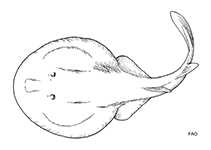
Narrow protractile mouth. Caudal is oval shape. Greater length of head anterior to spiracles, union of margins of its pelvic fins to their tips with the sides of the tail. Soft body and skin (Ref. 6902). Light brown to yellowish-brown dorsal color pattern; white to yellowish-white ventral color pattern, sometimes with distinct yellow markings on posterior ventral disc surface, ventral pelvic fin area, and around mouth. Caudal fin length much less than 1/2 length of tail, roughly equal to 1/5 length of tail; relatively more pronounced upper and lower lobes with lower strongly convex. Distance between dorsal and caudal fins about equal to distance between first and second dorsal fins. Snout relatively short, generally less than 1/3 in disc-length (24% of disc length in 43.5 cm TL female, 25% in 48.5 cm TL), but never much greater than 1/3 as in B. moresbyi (ca 40% in lectotype); disc more rounded, not as elongated as in B. moresbyi (Ref. 48493).
Body shape (shape guide): other.
Inhabits neritic waters, on sandy bottoms (Ref. 557). Found on continental and insular slopes at 250-1,000 m depths; adults apparently at greatest depths (Ref. 114953). Solitary. Tiny eyes are covered with skin so that the species is blind (Ref. 557). Feeds on marine invertebrates. Both ovaries are functional in an adult female, with numerous small oocytes of ca. 2 mm in thin-walled uteri. Maturity size of males at ca. 16 cm TL; birth size at 8-9 cm TL (Ref. 114953).
دورة الحياة وسلوك التزاوج
النضج | التكاثر | وضع البيض | بيض | الخصوبة | اليرقات
Claro, R., 1994. Características generales de la ictiofauna. p. 55-70. In R. Claro (ed.) Ecología de los peces marinos de Cuba. Instituto de Oceanología Academia de Ciencias de Cuba and Centro de Investigaciones de Quintana Roo. (Ref. 26340)
حالة القائمة الحمراء للاتحاد الدولي لحفظ الطبيعة والموارد الطبيعية (Ref. 130435: Version 2025-2 (Global))
استخدامات بشرية
مصائد: غير ذات اهمية
أدوات
تقارير خاصة
تنزيل XML
مصادر علي الأنترنت
تقديرات تستند إلى النماذج
درجة الحرارة المفضلة (مرجع
123201): 8.8 - 18.2, mean 13 °C (based on 77 cells).
مؤشر التنوع الشُعبي الوراثي (مرجع
82804): PD
50 = 0.5625 [Uniqueness, from 0.5 = low to 2.0 = high].
Bayesian length-weight: a=0.01175 (0.00470 - 0.02937), b=2.88 (2.66 - 3.10), in cm total length, based on LWR estimates for this (Sub)family-body shape (Ref.
93245).
مستوى غذائي (مرجع
69278): 3.2 ±0.4 se; based on size and trophs of closest relatives
المرونه (مرجع
120179): منخفض, الحد الزمني الأدني لتضاعف عدد أفراد المجتمع 4.5-14 سنة (Assuming fecundity<100).
ضعف الصيد (Ref.
59153): Low vulnerability (20 of 100).
🛈