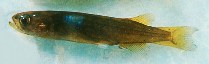
>
Galaxiiformes (Southern smelts) >
Galaxiidae (Galaxiids) > Galaxiinae
Etymology: Brachygalaxias: Greek, brachys, eia = short + Greek, galaxias = a fish (Ref. 45335).
Eponymy: Professor Dr Dillman Samuel Bullock (1878–1971) was an agriculturalist, naturalist and Methodist missionary. [...] (Ref. 128868), visit book page.
More on author: Regan.
Taxonomic Remarks
Includes B. gothei Busse (1982) which was considered a junior synonym of G. bullocki by Berra et al. (1995). See McDowall (1971b) for detailed description. Occasionally kept as an aquarium species.
Environnement : milieu / zone climatique / profondeur / gamme de distribution
Écologie
; eau douce benthopélagique. Temperate; 15°C - 20°C (Ref. 2060); 35°S - 42°S (Ref. 79894)
South America: Central Chile from about Talca south to Chiloé Island.
Taille / Poids / Âge
Maturité: Lm ? range ? - ? cm
Max length : 5.5 cm SL mâle / non sexé; (Ref. 34281)
Facultative air-breathing in the genus (Ref. 126274); Breeding activity occurs from June to September (Ref. 33843).
Cycle de vie et comportement reproducteur
Maturité | Reproduction | Frai | Œufs | Fécondité | Larves
Berra, T.M., 2003. Family Galaxiidae (Galaxiids). p. 503-506. In R.E. Reis, S.O. Kullander and C.J. Ferraris, Jr. (eds.) Checklist of the Freshwater Fishes of South and Central America. Porto Alegre: EDIPUCRS, Brasil. (Ref. 79894)
Statut dans la liste rouge de l'IUCN (Ref. 130435: Version 2025-2 (Global))
Menacé (EN) (A2ce+3ce+4ce); Date assessed: 30 April 2024
Menace pour l'homme
Harmless
Utilisations par l'homme
Outils
Articles particuliers
Télécharger en XML
Sources Internet
Estimations basées sur des modèles
Indice de diversité phylogénétique (Réf.
82804): PD
50 = 0.7500 [Uniqueness, from 0.5 = low to 2.0 = high].
Bayesian length-weight: a=0.00741 (0.00360 - 0.01526), b=3.13 (2.93 - 3.33), in cm total length, based on LWR estimates for this species & (Sub)family-body (Ref.
93245).
Niveau trophique (Réf.
69278): 3.1 ±0.4 se; based on size and trophs of closest relatives
Résilience (Réf.
120179): Faible, temps minimum de doublement de population : 4,5 à 14 années (Fec=50).
Vulnérabilité de la pêche (Ref.
59153): Low vulnerability (10 of 100).
🛈