>
Acropomatiformes (Oceanic basses) >
Symphysanodontidae (Slopefishes)
Etymology: Symphysanodon: Greek, syn, symphysis = grown together + Greek, physis = growth body form + Greek, odous = teeth; related to few teeth which are located over the area where the two jaws meet (Ref. 45335).
More on author: Bleeker.
Entorno: milieu / zona climática / rango de profundidad / gama de distribución
Ecología
marino bentopelágico; rango de profundidad 50 - 400 m (Ref. 54833). Deep-water
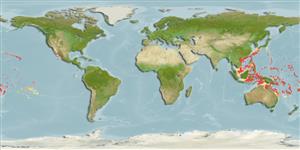
Pacific Ocean: Indonesia (off Lombok and the Kai Islands) and the Philippines (off Luzon) to the Hawaiian Islands.
Tamaño / Peso / Edad
Madurez: Lm ? range ? - ? cm
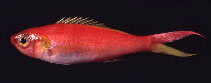
Max length : 17.0 cm SL macho / no sexado; (Ref. 9831)
Inhabits deep offshore trawling grounds (Ref. 54833). Probably feeds on zooplankton. Reported to be frequently consumed by the lutjanid Pristipomoides at Pathfinder Reef, Mariana Archipelago (Ref. 54833).
Ciclo vital y comportamiento de apareamiento
Madurez | Reproducción | Puesta | Huevos | Fecundidad | Larva
Anderson, W.D. Jr., 1999. Symphysanodontidae. Bunquelovelies (also wampeejawed fishes, slopefishes, and shelf beauties). p. 2438-2441. In K.E. Carpenter and V.H. Niem (eds.) FAO species identification guide for fishery purposes. The living marine resources of the Western Central Pacific. Volume 4. Bony fishes part 2 (Mugilidae to Carangidae). FAO, Rome. (Ref. 9831)
Situación en la Lista Roja de la UICN (Ref. 130435: Version 2025-2 (Global))
Amenaza para el ser humano
Harmless
Usos humanos
Pesquerías: escaso valor comercial
Herramientas
Informes especiales
Descargar XML
Fuentes de Internet
Estimaciones basadas en modelos
Temperatura preferida (Referencia
123201): 14.8 - 26.4, mean 20.7 °C (based on 157 cells).
Índice de diversidad filogenética (Referencia
82804): PD
50 = 0.5004 [Uniqueness, from 0.5 = low to 2.0 = high].
Bayesian length-weight: a=0.01122 (0.00514 - 0.02450), b=3.04 (2.87 - 3.21), in cm total length, based on all LWR estimates for this body shape (Ref.
93245).
Nivel trófico (Referencia
69278): 3.5 ±0.5 se; based on size and trophs of closest relatives
Vulnerabilidad pesquera (Ref.
59153): Low vulnerability (11 of 100).
🛈