>
Characiformes (Characins) >
Distichodontidae (Distichodus)
Etymology: Neolebias: Greek, neos = new + Greek, lebias, ou = a kind of small fish (Ref. 45335).
Eponymy: Dr Ethelwynn Trewavas (1900–1993) was an eminent British ichthyologist. [...] (Ref. 128868), visit book page.
More on authors: Poll & Gosse.
Milieu: milieu / Klimaatzone / Diepte / verspreidingsgebied
Ecologie
; zoet water pelagisch; dH range: ? - 12. Tropical; 24°C - 28°C (Ref. 12468)
Africa: present in the middle and upper Congo River basin (Ref. 81638, 94734, 106245, 106290) and the Nile (Ref. 28714, 94734) basin. Present in Cameroon, Gabon, Republic of Congo, Cabinda (Ref. 81638), Democratic Republic of the Congo and South Sudan (Ref. 94734).
Grootte / Gewicht / Leeftijd
Maturiteit: Lm ? range ? - ? cm
Max length : 4.1 cm SL mannelijk / geslacht onbekend; (Ref. 7094)
Dorsale stekels (totaal) : 0; Dorsale zachte stralen (totaal) : 10 - 14; Anale stekels: 0; Anale zachte stralen: 12 - 15. Diagnosis: laterosensory canal on lateral surface of head limited to arch of pores around ventral and posterior margins of orbit and associated with preopercle; 6th infraorbital (dermosphenotic) present, with laterosensory canal segment; infraorbital present at posterior margin of orbit; maxilla with 4 or fewer teeth, reaching past vertical through anterior margin of orbit; scaly process present at base of pelvic fin; dark pigmentation along lateral surface of body two scales wide or less; dark band on lateral surface of body passing through lower portion of caudal peduncle; base of caudal fin unpigmented or with rounded spot that falls distinctly short of dorsal and ventral margins of caudal peduncle (Ref. 81638).
Body shape (shape guide): fusiform / normal.
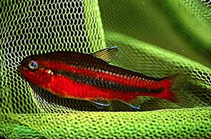
Maximum TL was recorded at 5.3 cm (Ref. 7094). Occurs in fringing vegetation; omnivorous browser, consumes plant fragments, algae, protozoans, rotifers, small crustaceans and insects (Ref. 28714).
Levenscyclus en paargedrag
Maturiteit | Voortplanting | Paaien | Eieren | Fecunditeit | Larven
Daget, J. and J.-P. Gosse, 1984. Distichodontidae. p. 184-211. In J. Daget, J.-P. Gosse and D.F.E. Thys van den Audenaerde (eds.) Check-list of the freshwater fishes of Africa (CLOFFA). ORSTOM, Paris and MRAC, Tervuren. Vol. 1. (Ref. 7094)
Status op de Rode Lijst van het IUCN (Ref. 130435: Version 2025-2 (Global))
Gevaar voor de mens
Harmless
Gebruik door de mens
Tools
Speciale rapporten
Download XML
Internetbronnen
Schattingen op basis van modellen
Fylogenetische diversiteitsindex (Ref.
82804): PD
50 = 0.5002 [Uniqueness, from 0.5 = low to 2.0 = high].
Bayesian length-weight: a=0.01318 (0.00575 - 0.03024), b=3.04 (2.84 - 3.24), in cm total length, based on LWR estimates for this (Sub)family-body shape (Ref.
93245).
Trofisch niveau (Ref.
69278): 2.8 ±0.29 se; based on food items.
Kwetsbaarheid van de visserij (Ref.
59153): Low vulnerability (10 of 100).
🛈