Taxonomic Remarks
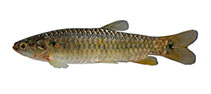
No recent study. The body is stocky with a dark spot just behind the head and another at the base of the caudal fin. All lebiasinids are mainly insectivorous feeding generally near the surface of the water. Lebiasina bimaculata especially has been used in the control of mosquitoes. Thus it has been introduced into regions where it was not native. Its original distribution was in the coastal streams between the Lima area of central Peru north to northern Ecuador. It also occurs inland at higher elevations in the Cajamarca region of central Peru. Pearson (1937: 89) remarks that this fish can live for a long time in a minimum quantity of water and that pre Inca people could easily have carried this fish from the coast up into the Cajamarca valley where it has adapted and spread into the upper Marañon River. Marilyn Weitzman, pers. comm., Eschmeyer, 1998:229; Ortega and Vari, 1986:10.
Entorno: milieu / zona climática / rango de profundidad / gama de distribución
Ecología
; agua dulce bentopelágico; pH range: 6.2 - 7.5; dH range: ? - 25. Tropical; 22°C - 26°C (Ref. 2059)
South America: Ecuador and Peru west of the Andes; also Marañon River basin.
Tamaño / Peso / Edad
Madurez: Lm ? range ? - ? cm
Max length : 16.0 cm SL macho / no sexado; (Ref. 37104)
Facultative air-breathing (Ref. 126274); Used as a mosquito control (Ref. 26543).
Ciclo vital y comportamiento de apareamiento
Madurez | Reproducción | Puesta | Huevos | Fecundidad | Larva
Weitzman, M. and S.H. Weitzman, 2003. Lebiasinidae (Pencil fishes). p. 241-251. In R.E. Reis, S.O. Kullander and C.J. Ferraris, Jr. (eds.) Checklist of the Freshwater Fishes of South and Central America. Porto Alegre: EDIPUCRS, Brasil. (Ref. 37104)
Situación en la Lista Roja de la UICN (Ref. 130435: Version 2025-2 (Global))
Amenaza para el ser humano
Harmless
Usos humanos
Pesquerías: comercial; Acuario: Comercial; carnada: occasionally
Herramientas
Informes especiales
Descargar XML
Fuentes de Internet
Estimaciones basadas en modelos
Índice de diversidad filogenética (Referencia
82804): PD
50 = 0.5000 [Uniqueness, from 0.5 = low to 2.0 = high].
Bayesian length-weight: a=0.01122 (0.00514 - 0.02450), b=3.04 (2.87 - 3.21), in cm total length, based on all LWR estimates for this body shape (Ref.
93245).
Nivel trófico (Referencia
69278): 3.6 ±0.4 se; based on size and trophs of closest relatives
Vulnerabilidad pesquera (Ref.
59153): Low vulnerability (10 of 100).
🛈
Nutrientes (Ref.
124155): Calcium = 137 [48, 313] mg/100g; Iron = 1.47 [0.73, 3.27] mg/100g; Protein = 17.8 [15.9, 19.9] %; Omega3 = 0.533 [0.189, 1.477] g/100g; Selenium = 63.6 [27.0, 153.0] μg/100g; VitaminA = 83.1 [30.9, 199.6] μg/100g; Zinc = 2.47 [1.71, 3.49] mg/100g (wet weight);