分类 / 名称
俗名 | 同种异名 | Catalog of Fishes(属, 种) | ITIS | CoL | WoRMS | Cloffa
环境:氛围 / 气候带 / 深度上下限 / 分布范围
生态学
海洋 居于水底的. 熱帶
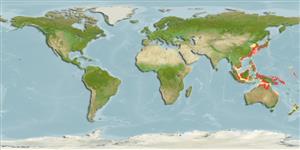
Northwest Pacific: southern Japan to the China seas. Possibly in Thailand (Ref. 9918). Reported from India (Ref. 45255).
西北太平洋: 日本南部到中國海。 可能地在泰國.(參考文獻 9918) 記錄來自印度了。 (參考文獻 45255)
首次成熟时的长度 / 大小 / 重量 / 年龄
成熟度: Lm 57.0, range 55 - 59 cm
Max length : 100.0 cm TL 雄鱼/尚未辨别雌雄; (Ref. 637)
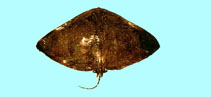
Inhabits sandy or muddy bottom in shallow waters (Ref. 11230). Feeds on benthic animals. Spines covered with skin with poisonous glands. Ovoviviparous. Used as 'kamaboko' material (Ref. 637). Caught often by demersal trawl, trammel and gillnet fisheries, and occasionally using tangle nets.Utilized for its meat, but of limited value due to its typically small size (Ref.58048).
栖息于沙的或在浅水区中的泥底部.(参考文献 11230) 吃底栖的动物。 棘用毒腺覆盖着皮肤了。 卵胎生的。 用作了 'kamaboko' 材料。 (参考文献 637)
生命周期和交配行为
成熟度 | 繁殖 | 产卵场 | 卵 | 孕卵数 | 仔鱼
Exhibit ovoviparity (aplacental viviparity), with embryos feeding initially on yolk, then receiving additional nourishment from the mother by indirect absorption of uterine fluid enriched with mucus, fat or protein through specialised structures (Ref. 50449). Distinct pairing with embrace (Ref. 205). Gives birth to ~3 pups; born between 20-22 cm WD (Ref.58048). 西北太平洋: 日本南部到中國海。 可能地在泰國.(參考文獻 9918) 記錄來自印度了。 (參考文獻 45255)
Masuda, H., K. Amaoka, C. Araga, T. Uyeno and T. Yoshino, 1984. The fishes of the Japanese Archipelago. Vol. 1. Tokai University Press, Tokyo, Japan. 437 p. (text). (Ref. 559)
世界自然保护联盟红皮书 (Ref. 130435: Version 2025-2 (Global))
易受伤害 (VU) (A2d); Date assessed: 29 August 2019
人类利用
渔业: bycatch
工具
特别资料
下载 XML
网络资源
基于模型的估算
首选温度 (参考文献
123201): 17.9 - 29.1, mean 28.1 °C (based on 1500 cells).
系统发育多样性指数 (参考文献
82804): PD
50 = 0.5000 [Uniqueness, from 0.5 = low to 2.0 = high].
Bayesian length-weight: a=0.00851 (0.00393 - 0.01841), b=3.08 (2.88 - 3.28), in cm total length, based on LWR estimates for this (Sub)family-body shape (Ref.
93245).
营养阶层 (参考文献
69278): 3.8 ±0.61 se; based on food items.
回复力 (参考文献
120179): 非常低的, 最小族群倍增时间超过14 年 (Fec assumed to be <10).
渔业脆弱性 (Ref.
59153): High vulnerability (60 of 100).
🛈