>
Scombriformes (Mackerels) >
Scombridae (Mackerels, tunas, bonitos) > Scombrinae
Etymology: Scomberomorus: Latin, scomber = mackerel + Greek, moros = silly, stupid (Ref. 45335).
Eponymy: Ian Stafford Ross Munro (1919–1994) was an Australian ichthyologist, aquarist and marine biologist. [...] (Ref. 128868), visit book page.
Môi trường: môi trường / vùng khí hậu / Mức độ sâu / phạm vi phân phối
Sinh thái học
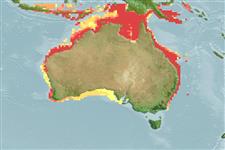
biển pelagic-neritic; Ở đại duơng, biển (Ref. 51243); mức độ sâu ? - 100 m (Ref. 6390). Tropical; 6°S - 38°S, 110°E - 157°E (Ref. 168)
Western Pacific: restricted to the northern coast of Australia, from the Abrolhos Islands region of Western Australia to Coffs Harbor and Kempsey in central New South Wales; also occurring in southern Papua New Guinea from Kerema to Port Moresby.
Chiều dài lúc trưởng thành đầu tiên / Bộ gần gũi / Khối lượng (Trọng lượng) / Tuổi
Chín muồi sinh dục: Lm ?, range 61 - ? cm
Max length : 104 cm FL con đực/không giới tính; (Ref. 6390); Khối lượng cực đại được công bố: 10.2 kg (Ref. 3132)
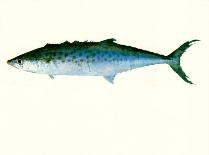
Các tia vây lưng cứng (tổng cộng) : 20 - 22; Các vây lưng mềm (tổng cộng) : 17 - 20; Tia cứng vây hậu môn: 0; Tia mềm vây hậu môn: 17 - 19; Động vật có xương sống: 50 - 52. Interpelvic process small and bifid. Lateral line gradually curving down toward caudal peduncle. Intestine with 2 folds and 3 limbs. Swim bladder absent. Body covered with small scales. Sides with several poorly defined rows of round spots, larger than pupil but smaller than eye diameter. The inner surface of the pectoral fin is dark blue, the cheeks and belly silvery white, the anal fin and anal finlets light silvery gray, and the dorsal fin black, bright steely blue when fresh.
Body shape (shape guide): fusiform / normal; Cross section: oval.
Found more commonly in offshore, open waters away from reefs and shoals (Ref. 30199). Form large schools which move close inshore along the coast of Queensland, commonly taken between December and April or May. Feed largely on fishes, particularly anchovies and sardines with smaller quantities of shrimps and squids. Common fork length ranges between 50 to 80 cm (Ref. 168). Sometimes confused with S. niphonius.
Collette, B.B. and C.E. Nauen, 1983. FAO Species Catalogue. Vol. 2. Scombrids of the world. An annotated and illustrated catalogue of tunas, mackerels, bonitos and related species known to date. Rome: FAO. FAO Fish. Synop. 125(2):137 p. (Ref. 168)
Tình trạng Sách đỏ IUCN (Ref. 130435: Version 2025-2 (Global))
Mối đe dọa đối với con người
Reports of ciguatera poisoning (Ref. 6390)
Sử dụng của con người
Các nghề cá: tính thương mại; cá để chơi: đúng
Các công cụ
Báo cáo đặc biệt
Tải xuống XML
Các nguồn internet
Ước tính dựa trên mô hình
Nhiệt độ ưa thích (Tài liệu tham khảo
123201): 22.5 - 28.6, mean 27.5 °C (based on 574 cells).
Chỉ số đa dạng phát sinh loài (Tài liệu tham khảo
82804): PD
50 = 0.5000 [Uniqueness, from 0.5 = low to 2.0 = high].
Bayesian length-weight: a=0.00832 (0.00379 - 0.01824), b=3.03 (2.86 - 3.20), in cm total length, based on LWR estimates for this Genus-body shape (Ref.
93245).
Mức dinh dưỡng (Tài liệu tham khảo
69278): 4.3 ±0.76 se; based on food items.
Thích nghi nhanh (Tài liệu tham khảo
120179): Trung bình, thời gian nhân đôi của chủng quần tối thiểu là 1.4 - 4.4 năm (K=0.50; tm=1-2; tmax=7).
Sự dễ bị tổn thương của nghề đánh cá (Ref.
59153): Moderate vulnerability (36 of 100).
🛈