>
Pleuronectiformes (Flatfishes) >
Paralichthyidae (Large-tooth flounders)
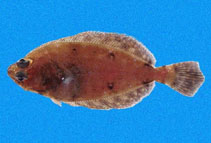
Etymology: Hippoglossina: Greek, ippos = horse + Greek, glossa = tongue (Ref. 45335).
Eponymy: Charles Harvey Bollman (1868–1889) was an America naturalist principally interested in fish and myriapods, considered by Jordan to be one of the most brilliant and promising naturalists ever known despite being just 20 when he died. [...] (Ref. 128868), visit book page.
More on author: Gilbert.
Umwelt: Milieu / Klimazone / Tiefenbereich / Verbreitungsgebiet
Ökologie
seewasser demersal; tiefenbereich 66 - 121 m (Ref. 9330). Tropical; 27°N -
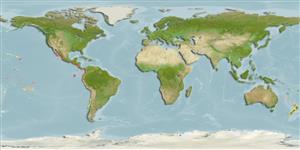
Eastern Pacific: Gulf of California to Peru.
Größe / Gewicht / Alter
Geschlechtsreife: Lm ? range ? - ? cm
Max length : 37.0 cm TL Männchen/unbestimmt; (Ref. 130775); common length : 18.0 cm TL Männchen/unbestimmt; (Ref. 55763); max. veröff. Gewicht: 481.20 g (Ref. 130775)
Inhabits soft or rocky bottoms. Exploited on a local level with trawl nets and is utilized fresh or as fishmeal.
Lebenszyklus und Paarungsverhalten
Geschlechtsreife | Fortpflanzung | Ablaichen | Eier | Fruchtbarkeit | Larven
Distinct pairing (Ref. 205).
Hensley, D.A., 1995. Paralichthyidae. Lenguados. p. 1349-1380. In W. Fischer, F. Krupp, W. Schneider, C. Sommer, K.E. Carpenter and V. Niem (eds.) Guia FAO para Identification de Especies para lo Fines de la Pesca. Pacifico Centro-Oriental. 3 Vols. FAO, Rome. (Ref. 9330)
IUCN Rote Liste Status (Ref. 130435: Version 2025-2 (Global))
Bedrohung für Menschen
Harmless
Nutzung durch Menschen
Fischereien: weniger kommerziell
Tools
Zusatzinformationen
Download XML
Internet Quellen
Schätzungen auf der Grundlage von Modellen
Bevorzugte Temperatur (Ref.
123201): 13.4 - 18.1, mean 15.9 °C (based on 18 cells).
Phylogenetischer Diversitätsindex (Ref.
82804): PD
50 = 0.5078 [Uniqueness, from 0.5 = low to 2.0 = high].
Bayesian length-weight: a=0.00724 (0.00346 - 0.01519), b=3.17 (3.00 - 3.34), in cm total length, based on LWR estimates for this (Sub)family-body shape (Ref.
93245).
Trophische Ebene (Ref.
69278): 3.9 ±0.2 se; based on size and trophs of closest relatives
Widerstandsfähigkeit (Ref.
120179): hoch, Verdopplung der Population dauert weniger als 15 Monate. (Preliminary K or Fecundity.).
Anfälligkeit der Fischerei (Ref.
59153): Low to moderate vulnerability (27 of 100).
🛈