>
Blenniiformes (Blennies) >
Tripterygiidae (Triplefin blennies) > Tripterygiinae
Etymology: Enneapterygius: Greek, ennea = nine times + Greek, pterygion = little fin (Ref. 45335).
More on author: Schultz.
Entorno: milieu / zona climática / rango de profundidad / gama de distribución
Ecología
marino asociado a arrecife; rango de profundidad 0 - 30 m (Ref. 13227). Tropical; 16°N - 4°N
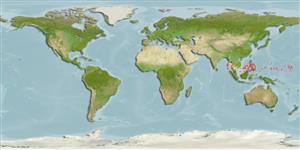
Pacific Ocean: Taiwan and northwestern Australia to Rapa, south to New Caledonia.
Tamaño / Peso / Edad
Madurez: Lm ? range ? - ? cm
Max length : 3.0 cm TL macho / no sexado; (Ref. 48636); 2.2 cm SL (female)
Descripción breve
Claves de identificación | Morfología | Morfometría
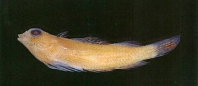
Espinas dorsales (total) : 14 - 16; Radios blandos dorsales (total) : 9 - 10; Espinas anales: 1; Radios blandos anales: 16 - 19. Semi-transparent with indistinct oblique pale and dusky bands on the body (Ref. 48636). Males are heavily pigmented under the head.
Body shape (shape guide): elongated.
Adults inhabit shallow coastal to outer reef crests and slopes but reported to 30 m depth (Ref. 48636). Also found in high isolated tidal pools and wave-swept tops of lagoon reefs (Ref. 1602). Occasionally found in intertidal pools. Eggs are hemispherical and covered with numerous sticky threads that anchor them in the algae on the nesting sites (Ref. 240). Larvae are planktonic which occur primarily in shallow, nearshore waters (Ref. 94114). Minimum depth of 0 m reported from Ref. 90102.
Ciclo vital y comportamiento de apareamiento
Madurez | Reproducción | Puesta | Huevos | Fecundidad | Larva
Fricke, R., 1994. Tripterygiid fishes of Australia, New Zealand and the southwest Pacific Ocean (Teleostei). Theses Zool. 24:1-585. (Ref. 13227)
Situación en la Lista Roja de la UICN (Ref. 130435: Version 2025-2 (Global))
Amenaza para el ser humano
Harmless
Usos humanos
Pesquerías: sin interés
Herramientas
Informes especiales
Descargar XML
Fuentes de Internet
Estimaciones basadas en modelos
Temperatura preferida (Referencia
123201): 28.3 - 29.1, mean 28.8 °C (based on 485 cells).
Índice de diversidad filogenética (Referencia
82804): PD
50 = 0.5000 [Uniqueness, from 0.5 = low to 2.0 = high].
Bayesian length-weight: a=0.00617 (0.00290 - 0.01310), b=3.04 (2.86 - 3.22), in cm total length, based on LWR estimates for this (Sub)family-body shape (Ref.
93245).
Nivel trófico (Referencia
69278): 3.1 ±0.3 se; based on size and trophs of closest relatives
Resiliencia (Referencia
120179): Alto, población duplicada en un tiempo mínimo inferior a 15 meses (Preliminary K or Fecundity.).
Vulnerabilidad pesquera (Ref.
59153): Low vulnerability (10 of 100).
🛈