>
Atheriniformes (Silversides) >
Atherinidae (Silversides) > Craterocephalinae
Etymology: Craterocephalus: Greek, krater, -eros = bowl, mixing vessel + Greek, kephale = head (Ref. 45335).
Ambiente: milieu / zona climática / intervalo de profundidade / gama de distribuição
Ecologia
marinhas; estuarina pelagic-neritic. Tropical; 11°S - 21°S
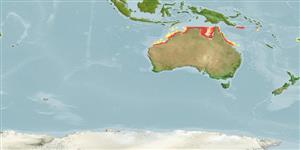
Eastern Indian Ocean and Western Central Pacific: northern Australia, from Western Australia to Fraser Island, around the islands of the Gulf of Carpentaria, and northeast Queensland.
Tamanho / Peso / Idade
Maturidade: Lm ? range ? - ? cm
Max length : 7.0 cm TL macho/indeterminado; (Ref. 9760)
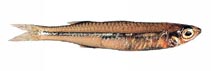
Espinhos anais: 1. Labial ligament inserting adjacent to symphysis of dentary. Lateral process of premaxilla pungent. Gill rakers on first lower gill arch, 13-17. Body scales on large specimens usually crenulated, midlateral scales 33-37. Black spot often present at base of pectoral fin.
Body shape (shape guide): elongated; Cross section: oval.
Mainly coastal and estuarine, often schooling with C. capreoli, Atherinomorus endrachtensis and A. ogilbyi. Diet includes crustaceans and diatoms. Breeds from December to March throughout the southern hemisphere. Appears to have a one year life span. May be food fish for larger commercially important fishes.
Ciclo de vida e comportamento de acasalamento
Maturidade | Reprodução | Desova | Ovos | Fecundidade | Larvas
Ivantsoff, W. and L.E.L.M. Crowley, 1999. Atherinidae. Silversides (or hardyheads). p. 2113-2139. In K.E. Carpenter and V.H. Niem (eds.) FAO species identification guide for fishery purposes. The living marine resources of the Western Central Pacific. Volume 4. Bony fishes part 2 (Mugilidae to Carangidae). FAO, Rome. (Ref. 9760)
Categoria na Lista Vermelha da IUCN (Ref. 130435: Version 2025-2 (Global))
Ameaça para o homem
Harmless
Utilização humana
Pescarias: sem interesse
Ferramentas
Relatórios especiais
Descarregue XML
Fontes da internet
Estimativas baseadas em modelos
Temperatura preferida (Ref.
123201): 26.3 - 28.7, mean 27.7 °C (based on 250 cells).
Índice de diversidade filogenética (Ref.
82804): PD
50 = 0.5000 [Uniqueness, from 0.5 = low to 2.0 = high].
Bayesian length-weight: a=0.00389 (0.00180 - 0.00842), b=3.12 (2.94 - 3.30), in cm total length, based on all LWR estimates for this body shape (Ref.
93245).
Nível Trófico (Ref.
69278): 2.8 ±0.36 se; based on food items.
Resiliência (Ref.
120179): Elevada, tempo mínimo de duplicação da população menor que 15 meses (Preliminary K or Fecundity.).
Vulnerabilidade da pesca (Ref.
59153): Low vulnerability (10 of 100).
🛈