分類 / 名前
共通名の | 類義語 | Catalog of Fishes(部類, 種) | ITIS | CoL | WoRMS | Cloffa
>
Gadiformes (Cods) >
Merlucciidae (Merluccid hakes)
Etymology: Merluccius: Latin, mar, maris = the sea + Latin, lucius = pike (Ref. 45335).
環境:環境 / 気候帯 / 深さの範囲 / 分布範囲
生態学
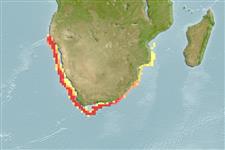
海 深海魚; 移住性ではない; 深さの範囲 200 - 1000 m (Ref. 6605), usually 400 - ? m (Ref. 58452). Deep-water; 17°S - 38°S, 10°E - 48°E (Ref. 58452)
Southeast Atlantic: Cape Frio, Namibia south to the Agulhas Bank and east to East London in South Africa. Western Indian Ocean: Madagascar Ridge (33°S,44°E).
初回成熟時の長さ / サイズ / 重さ / 年齢
成熟: Lm 47.8 range ? - ? cm
Max length : 115 cm TL オス/雌雄の選別がない; (Ref. 27121); common length : 60.0 cm SL オス/雌雄の選別がない; (Ref. 1371)
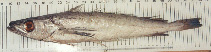
背面の脊椎 (合計) : 1; 背鰭 (合計) : 42 - 50; 肛門の骨: 0; 臀鰭: 38 - 41. Body more slender than other hakes. Head large, about 25 to 30% of SL. Gill rakers short and thick with blunt tips. Pectoral fin tips reaching to level of anal fin origin. Color is steel gray on back, grading to silvery white ventrally.
Body shape (shape guide): elongated; Cross section: oval.
Found near the bottom. Feeds on fishes, mysids, euphausiids and squids. Young feed mainly on euphausiids, but the diet becomes polyphagous with growth. Cannibalism has been observed in larger individuals (Ref. 9583).
ライフサイクルと交尾行動
成熟 | 繁殖 | 放精 | 卵 | 生産力 | 幼生
Cohen, D.M., T. Inada, T. Iwamoto and N. Scialabba, 1990. FAO species catalogue. Vol. 10. Gadiform fishes of the world (Order Gadiformes). An annotated and illustrated catalogue of cods, hakes, grenadiers and other gadiform fishes known to date. FAO Fish. Synop. 125(10). Rome: FAO. 442 p. (Ref. 1371)
IUCNのレッドリストの状況は (Ref. 130435: Version 2025-2 (Global))
人間の用途
水産業: 高い商業の
用具
特記事項
XMLをダウンロードして下さい
インターネットの情報源
モデルに基づく推定値
好ましい温度 (参照
123201): 6.2 - 12, mean 7.5 °C (based on 17 cells).
系統多様性指数 (参照
82804): PD
50 = 0.5000 [Uniqueness, from 0.5 = low to 2.0 = high].
Bayesian length-weight: a=0.00525 (0.00300 - 0.00918), b=3.09 (2.94 - 3.24), in cm total length, based on LWR estimates for this species & Genus-body shape (Ref.
93245).
栄養段階 (参照
69278): 3.8 ±0.2 se; based on diet studies.
回復力 (参照
120179): 低い, 4.5年~14年の倍増期間の最小個体群 (K=0.09-0.12).
漁業の脆弱性 (Ref.
59153): High to very high vulnerability (65 of 100).
🛈
気候脆弱性 (Ref.
125649): High vulnerability (55 of 100).
🛈
栄養素 (Ref.
124155): Calcium = 7.36 [3.59, 25.05] mg/100g; Iron = 0.274 [0.058, 0.735] mg/100g; Protein = 17.3 [16.1, 18.5] %; Omega3 = 0.146 [0.078, 0.273] g/100g; Selenium = 28 [13, 66] μg/100g; VitaminA = 11.7 [2.4, 55.4] μg/100g; Zinc = 0.186 [0.127, 0.288] mg/100g (wet weight);