Entorno: milieu / zona climática / rango de profundidad / gama de distribución
Ecología
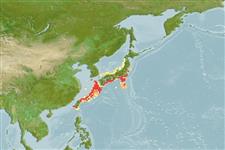
marino demersal; rango de profundidad 220 - 1100 m (Ref. 114953). Temperate; 42°N - 21°N, 119°E - 146°E (Ref. 114953)
Northwest Pacific: Japan and Taiwan.
Tamaño / Peso / Edad
Madurez: Lm ? range ? - ? cm
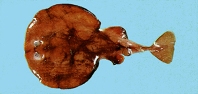
Max length : 69.3 cm TL macho / no sexado; (Ref. 94813)
Inhabits shelf edges to about 1000 m (Ref. 41299). Ovoviviparous (Ref. 50449). Maturity size of males at ca. 68 cm TL; birth size at ca. 20 cm TL (Ref. 114953). Reported to be infrequently captured as by-catch, but of no commercial importance (Ref. 94813).
Ciclo vital y comportamiento de apareamiento
Madurez | Reproducción | Puesta | Huevos | Fecundidad | Larva
Exhibit ovoviparity (aplacental viviparity), with embryos feeding initially on yolk, then receiving additional nourishment from the mother by indirect absorption of uterine fluid enriched with mucus, fat or protein through specialised structures (Ref. 50449).
Mould, B., 1994. A world list of rays. The scientific nomenclature and distribution of the recent Batoidea (Batoidea, Elasmobranchii, Chondrichthyes). University of Nottingham, [UK]. 82 p. (Ref. 8630)
Situación en la Lista Roja de la UICN (Ref. 130435: Version 2025-2 (Global))
Amenaza para el ser humano
Harmless
Usos humanos
Pesquerías: sin interés
Herramientas
Informes especiales
Descargar XML
Fuentes de Internet
Estimaciones basadas en modelos
Índice de diversidad filogenética (Referencia
82804): PD
50 = 0.5001 [Uniqueness, from 0.5 = low to 2.0 = high].
Bayesian length-weight: a=0.01479 (0.00678 - 0.03229), b=2.97 (2.78 - 3.16), in cm total length, based on LWR estimates for this (Sub)family-body shape (Ref.
93245).
Nivel trófico (Referencia
69278): 4.2 ±0.6 se; based on size and trophs of closest relatives
Resiliencia (Referencia
120179): Muy bajo, población duplicada en un tiempo mínimo superior a 14 años (Preliminary K or Fecundity.).
Vulnerabilidad pesquera (Ref.
59153): Moderate to high vulnerability (48 of 100).
🛈