Taxonomic Remarks
No recent work; see Eigenmann & Eigenmann (1889:105) for key of identification; Géry (1977:103) for description in key.
Environnement : milieu / zone climatique / profondeur / gamme de distribution
Écologie
; eau douce démersal; pH range: 5.6 - 7.8; dH range: ? - 30. Tropical; 22°C - 26°C (Ref. 1672)
Central and South America: Amazon and Orinoco River basins and coastal rivers of the Guianas.
Taille / Poids / Âge
Maturité: Lm ? range ? - ? cm
Max length : 20.0 cm SL mâle / non sexé; (Ref. 27188)
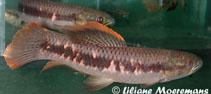
Obligate air-breathing (Ref. 126274); Lives in creeks and marshy zones where it can survive in water with low oxygen levels due to some anatomical modification of its swim bladder which serves as a respiratory appendage. It stays on the bottom as well as at the surface among floating vegetation (Ref. 27188). Feeds on small fishes and insects (Ref. 12225). Known among aquarists since 1910, its culture is reputedly difficult and its reproduction in captivity has not been reported to date (Ref. 27188). Reported to reach around 25 cm SL (Ref. 81048).
Cycle de vie et comportement reproducteur
Maturité | Reproduction | Frai | Œufs | Fécondité | Larves
Oyakawa, O.T., 2003. Erythrinidae (Trahiras). p. 238-240. In R.E. Reis, S.O. Kullander and C.J. Ferraris, Jr. (eds.) Checklist of the Freshwater Fishes of South and Central America. Porto Alegre: EDIPUCRS, Brasil. (Ref. 37025)
Statut dans la liste rouge de l'IUCN (Ref. 130435: Version 2025-2 (Global))
Menace pour l'homme
Harmless
Utilisations par l'homme
Pêcheries: sans intérêt; Aquarium: Commercial
Outils
Articles particuliers
Télécharger en XML
Sources Internet
Estimations basées sur des modèles
Indice de diversité phylogénétique (Réf.
82804): PD
50 = 0.7500 [Uniqueness, from 0.5 = low to 2.0 = high].
Bayesian length-weight: a=0.00933 (0.00526 - 0.01655), b=3.16 (3.00 - 3.32), in cm total length, based on LWR estimates for this species & (Sub)family-body (Ref.
93245).
Niveau trophique (Réf.
69278): 3.7 ±0.58 se; based on food items.
Résilience (Réf.
120179): Haut, temps minimum de doublement de population inférieur à 15 mois (Preliminary K or Fecundity.).
Vulnérabilité de la pêche (Ref.
59153): Low vulnerability (14 of 100).
🛈