>
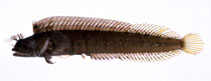
Blenniiformes (Blennies) >
Chaenopsidae (Pike-, tube- and flagblennies)
Etymology: Neoclinus: Greek,neos = new + Greek, klinein, kline = sloping and bed, due to the four apophyses of sphenoid bone (Ref. 45335).
More on authors: Jordan & Snyder.
Entorno: milieu / zona climática / rango de profundidad / gama de distribución
Ecología
marino demersal. Temperate
Western Pacific: Japan (Ref. 559) and South Korea (Ref. 77001). Eastern Pacific: California, USA.
Tamaño / Peso / Edad
Madurez: Lm ? range ? - ? cm
Max length : 8.0 cm TL macho / no sexado; (Ref. 559)
Found among gravel in the upper subtidal zone or in tide pools.
Ciclo vital y comportamiento de apareamiento
Madurez | Reproducción | Puesta | Huevos | Fecundidad | Larva
Masuda, H., K. Amaoka, C. Araga, T. Uyeno and T. Yoshino, 1984. The fishes of the Japanese Archipelago. Vol. 1. Tokai University Press, Tokyo, Japan. 437 p. (text). (Ref. 559)
Situación en la Lista Roja de la UICN (Ref. 130435: Version 2025-2 (Global))
Amenaza para el ser humano
Harmless
Usos humanos
Herramientas
Informes especiales
Descargar XML
Fuentes de Internet
Estimaciones basadas en modelos
Índice de diversidad filogenética (Referencia
82804): PD
50 = 0.5005 [Uniqueness, from 0.5 = low to 2.0 = high].
Bayesian length-weight: a=0.00525 (0.00224 - 0.01232), b=3.07 (2.86 - 3.28), in cm total length, based on LWR estimates for this (Sub)family-body shape (Ref.
93245).
Nivel trófico (Referencia
69278): 2.6 ±0.2 se; based on size and trophs of closest relatives
Vulnerabilidad pesquera (Ref.
59153): Low vulnerability (10 of 100).
🛈