>
Ceratodontiformes (Australian lungfishes) >
Protopteridae (African lungfishes)
Etymology: Protopterus: Greek, pro = first, in front of + Greek, pteron = wing, fin (Ref. 45335).
ສະພາບແວດລ້ອມ: ສະພາບແວດລ້ອມ / ເຂດດິນຟ້າອາກາດ / ລະດັບຄວາມເລິກ / ຂອບເຂດການແຈກຢາຍ
ນິເວດວິທະຍາ
; ນ້ຳຈືດ ອາໄສຢູ່ໃກ້ໜ້າດິນໃຕ້ພື້ນທ້ອງນ້ຳ; ກຸ່ມຫຼືຊະນິດປາທີ່ມີການເຄື່ອນຍ້າຍພາຍໃນນ້ຳຈືດ (Ref. 51243). Tropical; 25°C - 30°C (Ref. 2059); 22°N - 30°S
Africa: large Sahelian basins, Comoé River, Bandama River and some basins of Sierra Leone and Guinea (Protopterus annectens annectens) (Ref. 2834, 81261), upper Congo River, middle and lower Zambezi basin and all east coast rivers south to the Limpopo River (Ref. 3498, Ref. 13337), and Lake Rukwa (Ref. 13337) (Protopterus annectens brieni). Reports from the upper Cubango and Okavango system (Ref. 11970) unconfirmed (Ref. 52193, 120641).
ຂະໜາດ / ນ້ຳໜັກ / ອາຍຸ
ການຈະເລີນເຕັມໄວ: Lm ? range ? - ? cm
Max length : 100.0 cm TL ຕົວຜູ້/ບໍ່ມີເພດ; (Ref. 3799); ນ້ຳໜັກສູງສຸດທີ່ເຄຍຈັດພີມມາ: 4.0 kg (Ref. 3069)
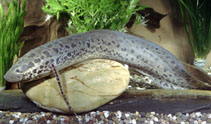
Diagnosis: Protopterus annectens annectens has an elongate body and paired fins are long and filamentous (Ref. 81261). The trunk, with 34-37 ribs, is a bit longer and the tail a bit shorter compared to Protopterus annectens brieni (Ref. 40587).
Body shape (shape guide): elongated; Cross section: circular.
Obligate air-breathing (Ref. 126274); Obligate air-breathing (Ref. 126274). Found in marginal swamps and backwaters of rivers and lakes (Ref. 30488). Carnivorous, food includes molluscs (Ref. 30488), but also frogs, fish and seed (Ref. 13851). In Kenya it feeds mostly on plant material, like roots (Ref. 30558). Strongly associated with life of aquatic plants in terms of breeding and feeding ecologies; nests are made in weedy areas (Ref. 30558). Normally lives on flood plains and secretes, when these dry up during the dry season, a thin slime around itself which dries into a fragile cocoon; normally hibernates from the end of one wet season to the start of the next, buut can live in its cocoon for over a year (Ref. 3023, 30558). For hibernating the fish literally chews its way into the substrate ejecting mud out of its gill openings, reaching a depth of 3-25 cm below the surface depending on the length of the fish; the lungfish wriggles around, thereby hollowing out a bulb-shaped chamber and coming to rest with its nose pointing upward; they breathe air at the mouth of the chamber's tube and then sink back into the expanded part of the chamber (Ref. 36739). As the water disappears the respiratory trips cease; air reaches the fish via the tube to the surface (Ref. 36739). Under aquatic conditions this lungfish can survive more than three and half years of starvation, showing the same behavior - no motion and same body posture - as an aestivating specimen (Ref. 51339).
Lungfish spawn in the swamps during the wet season, building a nest in which the eggs, white in colour and about 4 mm diameter, are laid; young are cared for by the males (Ref. 13851). Larvae hatch in eight days, and leave the nest in twenty days (Ref. 41544). Males of Protopterus annectens brieni excavate an U-shaped burrow to a depth of nearly 60 cm for spawning purposes; nest is usually placed amongst roots of aquatic vegetation where the male will attend to several females during the breeding season; males aerate the eggs with body and fin movements and provide protection to the young for some time after incubation (Ref. 13337).
Teugels, G.G., C. Lévêque, D. Paugy and K. Traoré, 1988. État des connaissances sur la faune ichtyologique des bassins côtiers de Côte d'Ivoire et de l'ouest du Ghana. Rev. Hydrobiol. Trop. 21(3):221-237. (Ref. 272)
ສະຖານະພາບບັນຊີແດງຂອງ IUCN (Ref. 130435: Version 2025-2 (Global))
ໄພຂົ່ມຂູ່ຕໍ່ມະນຸດ
Harmless
ການນໍາໃຊ້ຂອງມະນຸດ
ການປະມົງ: ທີ່ເປັນການຄ້າໜ້ອຍ; ການລ້ຽງສັດນ້ຳ: ເປັນສີນຄ້າ
ເຄື່ອງມື
ບົດລາຍງານພິເສດ
ດາວໂຫລດ XML
ແຫຼ່ງອີນເຕີເນັດ
ການຄາດຄະເນໂດຍອີງໃສ່ແບບຈໍາລອງ
ດັດຊະນີຄວາມຫຼາກຫຼາຍທາງຊີວະພາບ (ເອກະສານອ້າງອີງ
82804): PD
50 = 0.6562 [Uniqueness, from 0.5 = low to 2.0 = high].
Bayesian length-weight: a=0.00380 (0.00151 - 0.00959), b=3.10 (2.88 - 3.32), in cm total length, based on LWR estimates for this (Sub)family-body shape (Ref.
93245).
ຊັ້ນເຂດຮ້ອນ (ເອກະສານອ້າງອີງ
69278): 3.8 ±0.64 se; based on food items.
ຄວາມຢືດຢຸ່ນ (ເອກະສານອ້າງອີງ
120179): ຕຳ່, ປະຊາກອນຕຳ່ສຸດທີ່ໃຊ້ເວລາສອງເທົ່າ 4.5 - 14 ປີ (tmax = 23 (in captivity); Fec < 1,000).
ຄວາມສ່ຽງຕໍ່ການຫາປາ (Ref.
59153): High vulnerability (60 of 100).
🛈