Taxonomic Remarks
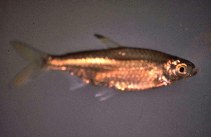
Affinities: most similar to M. elongatus, from which it differs in the presence of multicuspid (vs conical, monocuspid) inner dentary teeth, inner premaxillary and outer dentary teeth with greater number of cusps and a slightly more robus body (Ref. 80290).
Περιβάλλον: περιβάλλον / κλιματική ζώνη / εύρος βάθους / εύρος διανομής
Οικολογία
; Γλυκού νερού Πελαγικό(ά); pH range: 6.2 - 8.0; dH range: ? - 25; ποταμόδρομος (Ref. 51243). Tropical; 22°C - 26°C (Ref. 1672)
Africa: Congo, Okavango, Zambezi (Ref. 7248, 120641), Kunene and east coast rivers south to the Pongolo (Ref. 7248), Cross and Sanaga Rivers (Ref. 80290) and Tanzania (Ref. 4967). Nilo-Sudan and West-African reports of M. acutidens (e.g. Ref. 367, 51193) are misidentifications of M. elongatus (see DVD version of Ref. 81279; see also Ref. 2880).
Μήκος κατά την πρώτη ωρίμανση / Μέγεθος / Βάρος / Ηλικία
Γεννητική Ωρίμανση: Lm 3.4 range ? - ? cm
Max length : 9.0 cm SL αρσενικό/απροσδιόριστο; (Ref. 4967); μεγ. δημοσιευμένο βάρος: 2.00 g (Ref. 3799); μεγ. αναφερόμενη ηλικία: 3.00 έτη (Ref. 7248)
Ραχιαίες άκανθες (συνολικά) : 0; Μαλακές ραχιαίες ακτίνες (συνολικά) : 10 - 11; Εδρικές άκανθες: 0; Μαλακές εδρικές ακτίνες: 17 - 20. Diagnosis: inner dentary teeth multicuspid; 14-17 anal fin branched rays; dorsal fin apical tip black; scales of flank without melanophores concentrated along basal margin, pigment diffuse or absent (Ref. 80290).
Body shape (shape guide): fusiform / normal; Cross section: oval.
Shoals in clear, flowing or standing, open water; appears to co-exist with the tigerfish Hydrocynus forskalii in open water although it is heavily preyed upon by that predator, particularly those shoals of tigerfish ranging up to 45 cm in length (Ref. 13337). Omnivorous, often feeding from surface waters on winged insects; also takes insect larvae, crustaceans and eggs and fry of other fish (Ref. 13337). Matures after a year; partial spawner of moderate fecundity, with usually fewer than 700 eggs per female; shoals migrate upstream after first summer rains; breeds throughout the summer months; used as forage fish and as bait for tigerfish and pike (Ref. 7248).
Κύκλος ζωής και συμπεριφορά ζευγαρώματος
Γεννητική Ωρίμανση | Αναπαραγωγή | Γεννοβολία | Αβγά | Γονιμότητα | Προνύμφες
Skelton, P.H., 1993. A complete guide to the freshwater fishes of southern Africa. Southern Book Publishers. 388 p. (Ref. 7248)
Κατάσταση Κόκκινου Καταλόγου IUCN (Ref. 130435: Version 2025-2 (Global))
Απειλή για τον άνθρωπο
Harmless
Ανθρώπινες χρήσεις
αλιεία: χωρίς ενδιαφέρον; Ενυδρείο: Εμπορικό(ά); δόλωμα: usually
Εργαλεία
Ειδικές εκθέσεις
Λήψη XML
Διαδικτυακές πηγές
Εκτιμήσεις βάσει μοντέλων
Δείκτης φυλογενετικής ποικιλότητας (Αναφ.
82804): PD
50 = 0.5000 [Uniqueness, from 0.5 = low to 2.0 = high].
Bayesian length-weight: a=0.01148 (0.00633 - 0.02083), b=3.11 (2.95 - 3.27), in cm total length, based on LWR estimates for this species & (Sub)family-body (Ref.
93245).
Τροφικό Επίπεδο (Αναφ.
69278): 2.9 ±0.33 se; based on food items.
Generation time: 1.8 ( na - na) years. Estimated as median ln(3)/K based on 2
growth studies.
Ελαστικότητα (Αναφ.
120179): Υψηλό, ελάχιστος χρόνος για διπλασιασμό πληθυσμού < 15 μήνες (K=0.63; tmax=3).
Ευπάθεια στην αλιεία (Ref.
59153): Low vulnerability (23 of 100).
🛈