>
Siluriformes (Catfishes) >
Schilbeidae (Schilbid catfishes)
Etymology: mystus: Probably from the Greek "mustes" which literally means "initiated in the mysteries" (Ref. 43912).
More on author: Linnaeus.
Taxonomic Remarks
This species was commonly known as Schilbe (Eutropius) niloticus; the morphological examination of the holotype of Silurus mystus Linnaeus, 1758 (De Vos and Skelton, 1990) has shown that this specimen and Schilbe (Eutropius) niloticus Rüppel, 1829 belong to the same species; this results in the substitution of the name S. niloticus by the oldest name available, in this case, S. mystus.
Meio ambiente: milieu / Zona climática / intervalo de profundidade / faixa de distribuição
Ecologia
; Água doce demersal; potamódromo (Ref. 138143); intervalo de profundidade 4 - 69 m. Tropical; 23°C - 27°C (Ref. 1672); 25°N - 27°S, 17°W - 45°E
Africa: Nilo-Sudanese species, known from the Nile basin and in West Africa from the Senegal River eastwards to the Cross, Wouri and Sanaga River, including the Chad basin (Ref. 43912). Various reports, including from the Ogowe and Congo River basin or Zambia and Zimbabwe, are based on misidentifications (Ref. 43912). Reports from Angola and Tanzania are questionable and need confirmation.
Comprimento de primeira maturação / Tamanho / Peso / Idade
Maturidade: Lm 13.1, range 15 - ? cm
Max length : 35.0 cm SL macho/indeterminado; (Ref. 57127); peso máx. publicado: 250.00 g (Ref. 3799); idade máx. registrada: 7 anos (Ref. 7248)
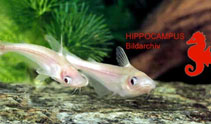
Espinhos dorsais (total) : 1; Raios dorsais (total) : 6. Diagnosis: adipose fin present (Ref. 43912, 57127, 81643) and fully developed (Ref. (Ref. 57127, 81643). Anterior nostrils more closer to each other than to posterior ones; inner margin of pectoral-fin spine strongly denticulate posteriorly (Ref. 43912, 57127, 81643). Nasal barbel reaching to anterior eye margin (Ref. 57127, 81643), but never extending beyond posterior margin of eye (Ref. 43912, 57127, 81643). Mouth subterminal (Ref. 57127, 81643), snout reaching beyond lower jaw (Ref. 43912). 45-64 branched anal-fin rays and 8-15 gill rakers on lower limb of first gill arch (Ref. 43912, 57127, 81643).
Body shape (shape guide): fusiform / normal; Cross section: compressed.
Lacustrine as well as fluviatile species, confined to lakes and moderate to large rivers (Ref. 43912). Adults shoal in standing or slowly flowing open water with emergent or submerged vegetation. Generally more active at night or in subdued light. They feed from mid-water and surface waters on a wide variety of foods including fish, insects, shrimps, snails, plant seeds, and fruit. Oviparous, eggs are unguarded (Ref. 205). Often important spawning migrations occur (Ref. 43912). They breed during the rainy season and may be either a single or multiple spawner in different localities, laying eggs on vegetation. May live up to 6-7 years (Ref. 7248). Max total length 45.0mm (Ref. 43912). Also caught with drawnets. In general considered as a flavoured, first class eating fish (Ref. 43912).
Distinct pairing (Ref. 205).
De Vos, L., 1995. A systematic revision of the African Schilbeidae (Teleostei, Siluriformes). With an annotated bibliography. Ann. Mus. R. Afr. Centr., Sci. Zool., 271:1-450. (Ref. 43912)
Status na Lista Vermelha da UICN (Ref. 130435: Version 2025-2 (Global))
Ameaça para os humanos
Harmless
Uso pelos humanos
Pescarias: espécies comerciais; peixe esportivo: sim; Aquário: Espécies comerciais
Ferramentas
Relatórios especiais
Baixar XML
Fontes da internet
Estimativas baseadas em modelos
Índice de diversidade filogenética (Ref.
82804): PD
50 = 0.5000 [Uniqueness, from 0.5 = low to 2.0 = high].
Bayesian length-weight: a=0.00741 (0.00588 - 0.00934), b=3.02 (2.95 - 3.09), in cm total length, based on LWR estimates for this species (Ref.
93245).
Nível Trófico (Ref.
69278): 3.5 ±0.4 se; based on diet studies.
Resiliência (Ref.
120179): médio(a), tempo mínimo de duplicação da população 1,4 - 4,4 anos (K=0.09-0.94; tmax=6-7; assuming fec > 10,000).
Vulnerabilidade da pesca (Ref.
59153): Moderate vulnerability (40 of 100).
🛈
Nutrientes (Ref.
124155): Calcium = 128 [51, 292] mg/100g; Iron = 1.48 [0.69, 2.75] mg/100g; Protein = 16.9 [15.1, 18.7] %; Omega3 = 0.542 [0.207, 1.418] g/100g; Selenium = 78.6 [34.3, 193.3] μg/100g; VitaminA = 37.6 [13.9, 92.5] μg/100g; Zinc = 1.5 [1.0, 2.1] mg/100g (wet weight);