>
Gobiiformes (Gobies) >
Oxudercidae (Mudskippers) > Periophthalminae
Etymology: Periophthalmus: Greek, peri = around + Greek, ophthalmos = eye (Ref. 45335).
Ambiente: milieu / zona climatica / distribuzione batimetrica / gamma di distribuzione
Ecologia
; acqua dolce; salmastro demersale. Tropical; 8°S - 19°S
Asia and Oceania: Currently known from Australia and Indonesia.
Dimensione / Peso / Età
Maturità: Lm ? range ? - ? cm
Max length : 8.0 cm SL maschio/sesso non determinato; (Ref. 44894)
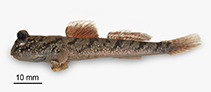
Spine dorsali (totale) : 10 - 15; Raggi dorsali molli (totale) : 12 - 13; Spine anali: 1; Raggi anali molli: 10 - 11. This species is distinguished by the following characters: D1 modally XI; D2 modally I,12; A modally I,11; caudal fin modally with 17 segmented rays; 71-110 lateral scales; 25-32 predorsal scales; inner rays of pelvic fin always united for more than three-quarters of their length; color of first dorsal fin red-brown or black, with broad, black submarginal stripe and white distal margin, the posterior edge concave, giving triangular shape to fin; color of second dorsal fin with whitish margin and one broad, black sub-marginal band and basal row of black spots; anal, pectoral, or caudal fins usually no markings, small brown spots or dusky pigment along length of fin or fin rays in some individuals; pelvic fin with prominent frenum and heavily pigmented on dorsal surface, with narrow, yellowish to whitish marginal band (Ref. 83599).
Body shape (shape guide): fusiform / normal.
Facultative air-breathing (Ref. 126274); An intertidal and amphibious air-breather (Ref. 31184) which inhabits brackish mangrove and nipa palm areas, sometimes enters the lower reaches of freshwater streams (Ref. 2847. 44894). Occurs in the margin of estuaries and tidal creeks (Ref. 44894). Actively shuttling back and forth between rock pools and air (Ref. 31184).
Ciclo vitale e comportamento di accoppiamento
Maturità | Riproduzione | Deposizione | Uova | Fecondità | Larve
Murdy, E.O., 1989. A taxonomic revision and cladistic analysis of the oxudercine gobies (Gobiidae: Oxudercinae). Rec. Aust. Mus., Suppl. 11:1-93. (Ref. 5218)
Stato della Lista Rossa IUCN (Ref. 130435: Version 2025-2 (Global))
Minaccia per l'uomo
Harmless
Usi umani
Strumenti
Rapporti speciali
Scarica XML
Fonti Internet
Stime basate su modelli
Indice di diversità filogenetica (Fonte Biblio.
82804): PD
50 = 0.5000 [Uniqueness, from 0.5 = low to 2.0 = high].
Bayesian length-weight: a=0.01096 (0.00516 - 0.02330), b=2.97 (2.79 - 3.15), in cm total length, based on LWR estimates for this Genus-body shape (Ref.
93245).
Livello trofico (Fonte Biblio.
69278): 3.2 ±0.4 se; based on size and trophs of closest relatives
Resilienza (Fonte Biblio.
120179): Alto, tempo minimo di raddoppiamento della popolazione meno di 15 mesi (Preliminary K or Fecundity.).
Vulnerabilità della pesca (Ref.
59153): Low vulnerability (10 of 100).
🛈