Classification / Noms
Noms communs | Synonymes | Catalog of Fishes(Genre, Espèce) | ITIS | CoL | WoRMS | Cloffa
>
Siluriformes (Catfishes) >
Siluridae (Sheatfishes)
Eponymy: R Adey Moore worked at the Bangkok Times, and served for many years as the honorary secretary of the Siam Society. Smith named the catfish after him “…in slight recognition of his sustained interest in the promotion of zoological science in Thailand.” (Ref. 128868), visit book page.
More on author: Smith.
Taxonomic Remarks
This species is questionably a synonym of Micronema cheveyi (Durand, 1940) according to Kottelat (1998: Ref. 027732), which is retained by Eschmeyer (CofF ver. Jul. 2010: Ref. 84883).
Environnement : milieu / zone climatique / profondeur / gamme de distribution
Écologie
; eau douce benthopélagique. Tropical
Asia: Chao Phrya (Thailand) and lower Mekong.
Taille / Poids / Âge
Maturité: Lm ? range ? - ? cm
Max length : 24.0 cm TL mâle / non sexé; (Ref. 12693)
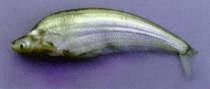
Épines dorsales (Total) : 0; Rayons mous dorsaux (Total) : 0; Rayons mous anaux: 66 - 68. No dorsal fin; deep body (3.8-4.0 times in SL); head 5.8-6.0 times in SL; jaws equal-sized; a single patch of vomerine teeth (Ref. 12693). Head depressed; snout bluntly rounded; eyes small, covered with sebaceous membrane; barbels 2 pairs (Ref. 45563).
Body shape (shape guide): elongated; Cross section: compressed.
Inhabits streams and canals in the floodplain. Feeds mainly on small fishes as well as prawns and insect larvae. Moves into inundated forests and floodplains during the high water season. Sold fresh (Ref. 12693).
Cycle de vie et comportement reproducteur
Maturité | Reproduction | Frai | Œufs | Fécondité | Larves
Rainboth, W.J., 1996. Fishes of the Cambodian Mekong. FAO species identification field guide for fishery purposes. FAO, Rome, 265 p. (Ref. 12693)
Statut dans la liste rouge de l'IUCN (Ref. 130435: Version 2025-2 (Global))
Menace pour l'homme
Harmless
Utilisations par l'homme
Pêcheries: commercial
Outils
Articles particuliers
Télécharger en XML
Sources Internet
Estimations basées sur des modèles
Indice de diversité phylogénétique (Réf.
82804): PD
50 = 0.6250 [Uniqueness, from 0.5 = low to 2.0 = high].
Bayesian length-weight: a=0.00562 (0.00281 - 0.01127), b=3.00 (2.83 - 3.17), in cm total length, based on LWR estimates for this (Sub)family-body shape (Ref.
93245).
Niveau trophique (Réf.
69278): 3.8 ±0.61 se; based on food items.
Résilience (Réf.
120179): Milieu, temps minimum de doublement de population : 1,4 à 4,4 années (Preliminary K or Fecundity.).
Vulnérabilité de la pêche (Ref.
59153): Low vulnerability (14 of 100).
🛈