Blenniella paula, Bluedash rockskipper

You can sponsor this page

Blenniella paula (Bryan & Herre, 1903)

Bluedash rockskipper
เพิ่มการสังเกตของคุณใน Fish Watcher
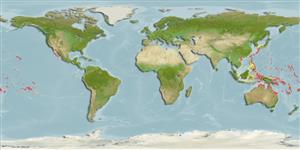
Native range
This map was computer-generated and has not yet been reviewed.
Blenniella paula   AquaMaps   Data sources: GBIF OBIS
อัพโหลดของคุณ ภาพถ่าย และ วิดีโอ
รูปภาพหลายรูป | Google image
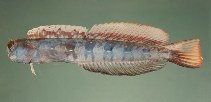
Image of Blenniella paula (Bluedash rockskipper)
Blenniella paula
ภาพโดย Randall, J.E.

การจำแนกประเภท / ชื่อ ชื่อสามัญ | ชื่อพ้อง | Catalog of Fishes(สกุล, ชนิด) | ITIS | CoL | WoRMS | Cloffa

> Blenniiformes (Blennies) > Blenniidae (Combtooth blennies) > Salariinae
Etymology: Blenniella: Diminutive of blennius, Greek,blenios = mucus (Ref. 45335).
More on authors: Bryan & Herre.

สิ่งแวดล้อม : สิ่งแวดล้อม / เขตภูมิอากาศ / ระดับความลึก / ระยะการกระจายสินค้า นิเวศวิทยา

เกี่ยวกับทะเล,น้ำเค็ม เกี่ยวกับหินโสโครก; ระดับความลึก 0 - 3 m (Ref. 86942). Tropical

การแพร่กระจาย อาณาเขต | พื้นที่จำแนกตาม FAO | ระบบนิเวศหลายระบบ | การปรากฏขึ้น,การเกิดขึ้น,พบ | ตำแหน่งบนแผนที่ | การแนะนำ | Faunafri

Western Pacific: southern Sulawesi; Palau to Marquesan and Ducie islands, north to Marcus Islands, south to Great Barrier Reef; throughout Micronesia; replaced by Blenniella periophthalmus in the Indian Ocean and southeast Asia from Ryukyus through Solomons to Santa Cruz Islands (Ref. 37816).

ขนาด / น้ำหนัก / อายุ

วัยเจริญพันธุ์: Lm ?  range ? - ? cm
Max length : 12.5 cm SL เพศผู้/กระเทย; (Ref. 9962); 13.1 cm SL (female)

คำอธิบายสั้นๆ เครื่องมือที่ใช้ในการแยกชนิดสัตว์,สิ่งมีชีวิตออกจากกัน | สัณฐานวิทยา | ความยาวต่างๆ

เงี่ยงครีบหลัง (รวม) : 12 - 14; ก้านครีบอ่อนที่หาง (รวม) : 18 - 21; เงี่ยงครีบก้น: 2; ก้านครีบอ่อนที่ก้น: 20 - 21; สัตว์มีกระดูกสันหลัง: 37 - 39. Diagnosis: Dorsal fin XII-XIV, 18-21, notched between spinous and segmented-ray portions; anal fin II, 20-21; pectoral rays 13-15 (usually 14); pelvic fin I, 3; caudal fin, procurrent rays 7, segmented rays 13. Vertebrae 12 + 25-27. Orbital cirrus simple and slender, may have a short lateral branch, less often up to 4 branches; nasal cirri short and palmate, may rarely have more than 6 branches; nuchal cirri simple and slender, may have a single branch or a ragged edge. Mandibular pores 6. Dorsal lips margin entire, ventral margin crenulated. Occipital crest absent, but large males have a low thin ridge (less than 1.8 mm); no crest or ridge in females (Ref. 9962).
Body shape (shape guide): elongated.

ชีววิทยา     ภาคผนวก (เช่น epibenthic)

Adults are common on exposed outer intertidal reef flats, in areas with numerous cracks and holes. They feed on filamentous algae and associated minute invertebrates, e.g., foraminiferans, ostracods, copepods, and gastropods (Ref. 37816). Oviparous. Eggs are demersal and adhesive (Ref. 205), and are attached to the substrate via a filamentous, adhesive pad or pedestal (Ref. 94114). Larvae are planktonic, often found in shallow, coastal waters (Ref. 94114).

วงจรชีวิตและพฤติกรรมการผสมพันธุ์ วัยเจริญพันธุ์ | การสืบพันธุ์ | การวางไข่ | เซลสืบพันธ์ของเพศเมีย(ไข่) | ความดกของไข่ | ตัวอ่อน

Oviparous, distinct pairing (Ref. 205).

อ้างอิงหลัก อัพโหลดข้อมูลอ้างอิงของคุณ | อ้างอิง | ผู้ประสานงาน : Williams, Jeffrey T. | ผู้ร่วมมือ

Springer, V.G. and J.T. Williams, 1994. The Indo-West Pacific blenniid fish genus Istiblennius reappraised: a revision of Istiblennius, Blenniella, and Paralticus, new genus. Smithson. Contrib. Zool. 565:1-193. (Ref. 9962)

สถานะบัญชีแดงของ IUCN (Ref. 130435: Version 2025-2 (Global))

  Least Concern (LC) ; Date assessed: 24 March 2009

CITES

Not Evaluated

CMS (Ref. 116361)

Not Evaluated

ภัยคุกคามต่อมนุษย์

  Harmless


การใช้ของมนุษย์

FAO - Publication: search | FishSource |

ข้อมูลเพิ่มเติม

นิเวศวิทยาเขตร้อน
รายการอาหาร (เหยื่อ)
องค์ประอบของอาหาร
การบริโภคอาหาร
การจัดสรรอาหาร
ผู้ล่า
นิเวศวิทยา
นิเวศวิทยา
พลวัตของประชากร
พารามิเตอร์การเจริญเติบโต
อายุสูงสุด / ขนาด
ความยาว-น้ำหนักสัมพันธ์
ความยาว-ความยาวสัมพันธ์
ความยาว-ความถี่
การแปลงมวล
การทดแทนที่
อุดมสมบรูณ์
วงจรชีวิต
การสืบพันธุ์
วัยเจริญพันธุ์
ความสมบูรณ์พันธุ์/เหงือกที่เกี่ยวข้อง
ความดกของไข่
การวางไข่
การรวมตัวของสปอน
เซลสืบพันธ์ของเพศเมีย(ไข่)
การพัฒนาไข่
ตัวอ่อน
พลวัตของสัตว์น้ำวัยอ่อน
กายวิภาคศาสตร์
พื้นที่เหงือก
สมอง
หินโสต
สรีรวิทยา
องค์ประกอบของร่างกาย
สารอาหาร
การใช้ออกซิเจน
ประเภทการว่ายน้ำ
ระดับความเร็วในการว่ายน้ำ
เม็ดสีที่มองเห็นได้
เสียงปลา
โรคและปรสิต
ความเป็นพิษ (LC50s)
พันธุศาสตร์
จีโนม
พันธุศาสตร์
ความไม่สมดุลทางเชื้อชาติ
อัตราพันธุกรรม
ความหลากหลายทางพันธุกรรม
เกี่ยวข้องกับมนุษย์
ระบบการเพาะเลี้ยงสัตว์น้ำ
ประวัติการเพาะเลี้ยงสัตว์น้ำ
สายพันธุ์
กรณีซิเกวเทอรา
แสตมป์ เหรียญ อื่นๆ
การเข้าถึง
ผู้ร่วมมือ
อ้างอิง
อ้างอิง

เครื่องมือ

รายงานพิเศษ

ดาวน์โหลด XML

แหล่งที่มาจากอินเตอร์เน็ต

การประมาณค่าตามแบบจำลอง

อุณหภูมิที่ต้องการ (อ้างอิง 123201): 24.7 - 29.4, mean 28.1 °C (based on 1052 cells).
ดัชนีความหลากหลายทางวิวัฒนาการ (อ้างอิง 82804):  PD50 = 0.5020   [Uniqueness, from 0.5 = low to 2.0 = high].
Bayesian length-weight: a=0.00776 (0.00354 - 0.01702), b=3.00 (2.81 - 3.19), in cm total length, based on LWR estimates for this (Sub)family-body shape (Ref. 93245).
ระดับชั้นอาหาร (อ้างอิง 69278):  3.1   ±0.40 se; based on food items.
ความสามารถในการกลับคืนสู่ปกติ (อ้างอิง 120179):  ความสูง, เวลาต่ำสุดที่จะทำให้ประชากรเพิ่มขึ้นเป็น 2 เท่าใช้เวลาน้อยกว่า 15 เดือน (Preliminary K or Fecundity.).
ความเสี่ยงต่อการตกปลา (Ref. 59153):  Low vulnerability (10 of 100). 🛈
สารอาหาร (Ref. 124155):  Calcium = 132 [64, 212] mg/100g; Iron = 0.708 [0.398, 1.203] mg/100g; Protein = 18.4 [17.2, 19.5] %; Omega3 = 0.0771 [, ] g/100g; Selenium = 15.7 [7.3, 34.6] μg/100g; VitaminA = 149 [45, 491] μg/100g; Zinc = 2.01 [1.31, 2.90] mg/100g (wet weight);