Classification / Noms
Noms communs | Synonymes | Catalog of Fishes(Genre, Espèce) | ITIS | CoL | WoRMS | Cloffa
Environnement : milieu / zone climatique / profondeur / gamme de distribution
Écologie
; eau douce benthopélagique; non migrateur (Ref. 126106). Temperate; 55°N - 30°N
North America: Hudson Bay basin from Manitoba to Alberta, Canada (absent in eastern Kansas) and south through Red River in Minnesota and North Dakota, USA. Mississippi River basin from Wisconsin and Minnesota south to Gulf; occurs as far east as West Virginia and as far west as eastern Colorado, USA.
Taille / Poids / Âge
Maturité: Lm ? range ? - ? cm
Max length : 13.0 cm TL mâle / non sexé; (Ref. 5723); common length : 7.6 cm TL mâle / non sexé; (Ref. 12193); âge max. reporté: 4 années (Ref. 12193)
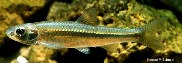
Adults inhabit pools and main channels of medium to large rivers, usually over sand and gravel (Ref. 5723, 10294). They feed on cladocerans and a variety of immature aquatic insects (Ref. 10294). Migratory behaviour is undetermined (Ref. 126106).
Cycle de vie et comportement reproducteur
Maturité | Reproduction | Frai | Œufs | Fécondité | Larves
Stout, C., S. Schönhuth, R. Mayden, N.L. Garrison and J.W. Armbruster, 2022. Phylogenomics and classification of Notropis and related shiners (Cypriniformes: Leuciscidae) and the utility of exon capture on lower taxonomic groups. PeerJ 10[e14072]:1-23. (Ref. 131297)
Statut dans la liste rouge de l'IUCN (Ref. 130435: Version 2025-2 (Global))
Menace pour l'homme
Harmless
Utilisations par l'homme
Outils
Articles particuliers
Télécharger en XML
Sources Internet
Estimations basées sur des modèles
Indice de diversité phylogénétique (Réf.
82804): PD
50 = 0.5000 [Uniqueness, from 0.5 = low to 2.0 = high].
Bayesian length-weight: a=0.00537 (0.00266 - 0.01086), b=3.10 (2.92 - 3.28), in cm total length, based on LWR estimates for this (Sub)family-body shape (Ref.
93245).
Niveau trophique (Réf.
69278): 2.7 ±0.31 se; based on food items.
Résilience (Réf.
120179): Milieu, temps minimum de doublement de population : 1,4 à 4,4 années (tmax=4).
Vulnérabilité de la pêche (Ref.
59153): Low vulnerability (10 of 100).
🛈