>
Atheriniformes (Silversides) >
Atherinopsidae (Neotropical silversides) > Menidiinae
Etymology: Labidesthes: Greek, labidos = pair of forceps + Greek esthio = to eat; in reference to the shape of the mouth (Ref. 45335); sicculus: Name most likely from Latin 'sicula' meaning small dagger (see Ref. 104856). Others consider the origin of the name from the Latin 'siccus' meaning dried, referring to being found in dried pools (Ref. 10294, 79012).
More on author: Cope.
Entorno: milieu / zona climática / rango de profundidad / gama de distribución
Ecología
; agua dulce pelágico; no migratorio (Ref. 126106). Subtropical; 5°C - 20°C (Ref. 13614); 46°N - 25°N
North America: Gulf of Mexico drainages from the Pearl River west to Brazos River including sthe Mississippi River drainage, and the Great Lakes (but not Lake Superior) - St. Lawrence River drainages.
Longitud en la primera madurez / Tamaño / Peso / Edad
Madurez: Lm 7.0 range ? - ? cm
Max length : 13.0 cm TL macho / no sexado; (Ref. 5723); common length : 8.4 cm TL macho / no sexado; (Ref. 12193); edad máxima reportada: 2.00 años (Ref. 12193)
Descripción breve
Claves de identificación | Morfología | Morfometría
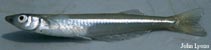
Espinas dorsales (total) : 4 - 7; Radios blandos dorsales (total) : 8 - 12; Espinas anales: 1; Radios blandos anales: 19 - 27. This species is distinguished and differs from Labidesthes vanhyningi by the following characters: Labidesthes sicculus have the anterolateral processes of the posttemporals longer than width of the base (vs. L. vanhyningi having the processes shorter than width of base); with a midlateral stripe tapering to insertion of pectoral fin in advance of first dorsal fin (vs. maintaining width or usually expanding, to insertion of pectoral fin in advance of the first dorsal-fin); a ratio of thoracic length to abdominal length greater than 2 (vs. less than 2) (Ref. 104856).
Body shape (shape guide): elongated; Cross section: compressed.
Adults occur near surface of lakes, ponds, and quiet pools of creeks and small to large rivers. Usually found in open water (Ref 5723, 10294). They feed on zooplankton, including copepods, cladocerans, and midge larvae (Ref. 10294).
Ciclo vital y comportamiento de apareamiento
Madurez | Reproducción | Puesta | Huevos | Fecundidad | Larva
Werneke, D.C. and J.W. Armbruster, 2015. Silversides of the genus Labidesthes (Atheriniformes: Atherinopsidae). Zootaxa 4032(5):535-550. (Ref. 104856)
Situación en la Lista Roja de la UICN (Ref. 130435: Version 2025-2 (Global))
Amenaza para el ser humano
Harmless
Usos humanos
Carnada: usually
Herramientas
Informes especiales
Descargar XML
Fuentes de Internet
Estimaciones basadas en modelos
Índice de diversidad filogenética (Referencia
82804): PD
50 = 0.7500 [Uniqueness, from 0.5 = low to 2.0 = high].
Bayesian length-weight: a=0.00447 (0.00241 - 0.00829), b=3.03 (2.86 - 3.20), in cm total length, based on LWR estimates for this species & (Sub)family-body (Ref.
93245).
Nivel trófico (Referencia
69278): 3.4 ±0.45 se; based on food items.
Resiliencia (Referencia
120179): Alto, población duplicada en un tiempo mínimo inferior a 15 meses (K=3.70; tmax=2).
Vulnerabilidad pesquera (Ref.
59153): Low vulnerability (10 of 100).
🛈