>
Perciformes/Percoidei (Perchs) >
Percidae (Perches) > Etheostomatinae
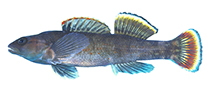
Etymology: Etheostoma: Greek, etheo = to strain + Greek, stoma = mouth; Rafinesque said "various mouths", but Jordan and Evermann suggest the name might have been intended as "Heterostoma (Ref. 45335); jordani: Named after David Starr Jordan, an eminent ichthyologist (Ref. 10294).
Eponymy: Dr David Starr Jordan (1851–1931) was a leading American ichthyologist, physician, educator, peace activist and believer in eugenics; moreover, he was founding President of Stanford University. [...] (Ref. 128868), visit book page.
More on author: Gilbert.
Entorno: milieu / zona climática / rango de profundidad / gama de distribución
Ecología
; agua dulce bentopelágico. Temperate; 35°N - 32°N
North America: found only in Alabama and Black Warrior River systems (in Mobile Bay drainage) in Georgia, Alabama and southeastern Tennessee, USA.
Tamaño / Peso / Edad
Madurez: Lm ? range ? - ? cm
Max length : 7.9 cm TL macho / no sexado; (Ref. 5723); common length : 5.0 cm TL macho / no sexado; (Ref. 12193)
Descripción breve
Claves de identificación | Morfología | Morfometría
Inhabit fast rocky riffles of creeks and small to medium rivers (Ref. 33799); also found in medium to large streams (Ref. 10294). Adults occur in the deepest portions of riffles with moderately strong current. Prey mainly on insects (midge and other dipteran larvae, mayfly nymphs, and smaller quantities of water mites and caddisfly larvae (Ref. 10294)). Feed by pecking small prey from the surface of rocks (Ref. 33799).
Ciclo vital y comportamiento de apareamiento
Madurez | Reproducción | Puesta | Huevos | Fecundidad | Larva
Page, L.M. and B.M. Burr, 1991. A field guide to freshwater fishes of North America north of Mexico. Houghton Mifflin Company, Boston. 432 p. (Ref. 5723)
Situación en la Lista Roja de la UICN (Ref. 130435: Version 2025-2 (Global))
Amenaza para el ser humano
Harmless
Usos humanos
Herramientas
Informes especiales
Descargar XML
Fuentes de Internet
Estimaciones basadas en modelos
Índice de diversidad filogenética (Referencia
82804): PD
50 = 0.5000 [Uniqueness, from 0.5 = low to 2.0 = high].
Bayesian length-weight: a=0.00676 (0.00303 - 0.01510), b=3.12 (2.94 - 3.30), in cm total length, based on LWR estimates for this Genus-body shape (Ref.
93245).
Nivel trófico (Referencia
69278): 3.5 ±0.4 se; based on diet studies.
Resiliencia (Referencia
120179): Alto, población duplicada en un tiempo mínimo inferior a 15 meses (Preliminary K or Fecundity.).
Vulnerabilidad pesquera (Ref.
59153): Low vulnerability (10 of 100).
🛈