>
Perciformes/Percoidei (Perchs) >
Percidae (Perches) > Etheostomatinae
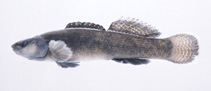
Etymology: Etheostoma: Greek, etheo = to strain + Greek, stoma = mouth; Rafinesque said "various mouths", but Jordan and Evermann suggest the name might have been intended as "Heterostoma (Ref. 45335); olivaceum: olivaceum refers to the coloration (Ref. 10294).
Entorno: milieu / zona climática / rango de profundidad / gama de distribución
Ecología
; agua dulce bentopelágico. Subtropical; 37°N - 35°N
North America: found only in the lower Caney Fork system and nearby tributaries of Cumberland River in central Tennessee, USA.
Tamaño / Peso / Edad
Madurez: Lm ? range ? - ? cm
Max length : 8.0 cm TL macho / no sexado; (Ref. 5723); common length : 5.0 cm TL macho / no sexado; (Ref. 12193); edad máxima reportada: 2.00 años (Ref. 12193)
Inhabit rocky pools and nearby riffles of headwaters and creeks (Ref. 5723); also found in streams (Ref. 10294). Often found in very shallow water less than 4 m deep (Ref. 5723). Juveniles feed on midge larvae and microcrustaceans; adults on midge larvae, other immature aquatic insects (mayflies, caddisflies, stoneflies), isopods and amphipods (Ref. 10294). Eggs are found clustered on underside of stone and guarded by males (Ref. 7043).
Ciclo vital y comportamiento de apareamiento
Madurez | Reproducción | Puesta | Huevos | Fecundidad | Larva
Eggs are found clustered on underside of stone (Ref. 7043). Males guard the eggs (Ref. 7043).
Page, L.M. and B.M. Burr, 1991. A field guide to freshwater fishes of North America north of Mexico. Houghton Mifflin Company, Boston. 432 p. (Ref. 5723)
Situación en la Lista Roja de la UICN (Ref. 130435: Version 2025-2 (Global))
Amenaza para el ser humano
Harmless
Usos humanos
Herramientas
Informes especiales
Descargar XML
Fuentes de Internet
Estimaciones basadas en modelos
Índice de diversidad filogenética (Referencia
82804): PD
50 = 0.5000 [Uniqueness, from 0.5 = low to 2.0 = high].
Bayesian length-weight: a=0.00676 (0.00303 - 0.01510), b=3.12 (2.94 - 3.30), in cm total length, based on LWR estimates for this Genus-body shape (Ref.
93245).
Nivel trófico (Referencia
69278): 3.3 ±0.5 se; based on size and trophs of closest relatives
Resiliencia (Referencia
120179): Alto, población duplicada en un tiempo mínimo inferior a 15 meses (tmax=2).
Vulnerabilidad pesquera (Ref.
59153): Low vulnerability (10 of 100).
🛈