>
Carangaria/misc (Various families in series Carangaria) >
Latidae (Lates perches)
Etymology: Lates: Latin, lateo, latere = to be hidden.
More on author: Bloch.
محیط زیست: محیط زیست / منطقه آب و هوایی / تغييرات عمق / محدوده توزیع
بوم شناسي
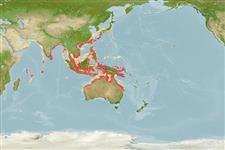
دريايي; آب شيرين; لب شور نزديك كف زي; دريا كوچ (Ref. 138269); تغييرات عمق 10 - 40 m (Ref. 7261). Tropical; 15°C - 28°C (Ref. 2060); 49°N - 26°S, 56°E - 155°E (Ref. 54239)
Indo-West Pacific: eastern edge of the Persian Gulf to China, Taiwan and southern Japan, southward to southern Papua New Guinea and northern Australia.
طول در اولین بلوغ / اندازه / وزن / سن
بلوغ: Lm 44.5, range 29 - 60 cm
Max length : 200 cm TL جنس نر / بدون خواص جنسي; (Ref. 7050); common length : 150 cm NG جنس نر / بدون خواص جنسي; (Ref. 9799); بيشينه وزن گزارش شده: 60.0 kg (Ref. 28138); بيشينه سن گزارش شده: 35 سال ها (Ref. 125591)
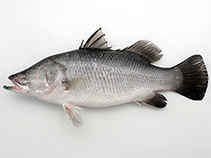
خارهاي باله پشتي (کل) : 7 - 9; شعاع نرم باله پشتي (کل) : 10 - 11; خارهاي باله مخرجي: 3; شعاع نرم باله مخرجي: 7 - 8. Body elongate; mouth large, slightly oblique, upper jaw extending behind the eye. Lower edge of preopercle serrated, with strong spine at its angle; opercle with a small spine and with a serrated flap above the origin of the lateral line. Caudal fin rounded.
Body shape (shape guide): fusiform / normal; Cross section: compressed.
Found in coastal waters, estuaries and lagoons, in clear to turbid water (Ref. 5259, 44894). A diadromous fish, inhabiting rivers before returning to the estuaries to spawn. A protandrous hermaphrodite (Ref. 32209). Larvae and young juveniles live in brackish temporary swamps associated with estuaries, and older juveniles inhabit the upper reaches of rivers (Ref. 6390, 44894). Have preference for cover on undercut banks, submerged logs and overhanging vegetation (Ref. 44894). Feed on fishes and crustaceans. They reach 1500-3000 g in one year in ponds under optimum conditions (Ref. 11046, 44894). Juveniles also eat insects (Ref. 44894). Sold fresh and frozen; consumed steamed, pan-fried, broiled and baked (Ref. 9987). A very popular and sought-after fish of very considerable economic importance (Ref. 9799). Presently used for aquaculture in Thailand, Indonesia and Australia (Ref. 9799). Australia's most important commercial fish and one of the most popular angling species (Ref. 44894).
Breed in estuaries throughout the Indo-Pacific. Maturing male barramundi migrate downstream from freshwater habitats at the start of the wet (monsoon) season to spawn with resident females in estuaries (Ref. 27132) and on tidal flats outside the mouths of rivers (Ref. 6390).
Barramundi spawn on the full moon and new moon, primarily at the beginning of an incoming tide which carries the eggs into the estuary (Ref. 28135).
Barramundi are broadcast spawners that aggregate to spawn (Ref. 6390). Spawning aggregations occur in or around the mouths of rivers (Ref. 28132). While adults and juveniles are capable of living in fresh water, brackish waters are required for embryonic development (Ref. 6136). Female barramundi are capable of producing large numbers of eggs, with estimates as high as 2.3 million eggs per kg of body weight (Ref. 28134).
Barramundi are protandrous hermaphrodites, i.e., they undergo sex reversion during their life cycle. Females are generally absent in the smaller length classes, but dominate larger length classes. Most barramundi mature first as males and function as males for one or more spawning seasons before undergoing sex inversion. A few females will develop directly from immature fish (Ref. 28132). Similarly, some males may never undergo sex inversion (Ref. 28132). Also Ref. 103751.
Larson, H., 1999. Order Perciformes. Suborder Percoidei. Centropomidae. Sea perches. p. 2429-2432. In K.E. Carpenter and V.H. Niem (eds.) FAO species identification guide for fishery purposes. The living marine resources of the Western Central Pacific. Volume 4. Bony fishes part 2 (Mugilidae to Carangidae). FAO, Rome. (Ref. 9799)
وضعيت در فهرست قرمز IUCN (Ref. 130435: Version 2025-2 (Global))
خطر برای انسان ها
Harmless
استفاده انسانی
ماهي گيري – شيلات: با ارزش تجاري بالا; آبزي پروري: تجاري; ماهي ها ي سرگرم كننده: بله; آكواريوم: آکواریوم عمومی
ابزارها
گزارش های ويژه
بارگيری XML
منابع اينترنتي
تخمینها بر اساس مدلها
دمای ترجیحی (مرجع
123201): 25 - 29.1, mean 28.3 °C (based on 710 cells).
شاخص تنوع فیلوژنتیکی (مرجع
82804): PD
50 = 0.5005 [Uniqueness, from 0.5 = low to 2.0 = high].
Bayesian length-weight: a=0.01000 (0.00634 - 0.01577), b=3.00 (2.87 - 3.13), in cm total length, based on LWR estimates for this species & Genus-body shape (Ref.
93245).
سطح تروفیک (مرجع
69278): 3.8 ±0.60 se; based on food items.
جهندگی (مرجع
120179): متوسط, كمينه زمان لازم براي دو برابر شدن جمعيت 4/1 – 4/4 سال (K=0.09-0.13; tm=1-5; Fec = 15,300,000).
Prior r = 0.52, 95% CL = 0.34 - 0.77, Based on 3 full stock assessments.
آسیبپذیری ماهیگیری (Ref.
59153): High to very high vulnerability (69 of 100).
🛈
آسیبپذیری اقلیمی (Ref.
125649): High to very high vulnerability (72 of 100).
🛈
مواد مغذی (Ref.
124155): Calcium = 115 [26, 284] mg/100g; Iron = 1 [0, 2] mg/100g; Protein = 19.6 [18.2, 21.1] %; Omega3 = 0.187 [0.117, 0.295] g/100g; Selenium = 144 [50, 373] μg/100g; VitaminA = 7.36 [2.09, 30.74] μg/100g; Zinc = 0.84 [0.34, 1.90] mg/100g (wet weight); based on
nutrient studies.