>
Eupercaria/misc (Various families in series Eupercaria) >
Labridae (Wrasses) > Scarinae
Etymology: Leptoscarus: Greek, leptos = thin + Latin, scarus = a fish cited by ancient writers; 1601 (Ref. 45335).
More on authors: Quoy & Gaimard.
Ambiente: milieu / zona climatica / distribuzione batimetrica / gamma di distribuzione
Ecologia
marino associati a barriera corallina; distribuzione batimetrica 1 - 15 m (Ref. 86942). Tropical; 30°N - 36°S, 18°E - 108°W
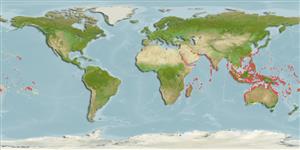
Southeast Atlantic: False Bay, South Africa. Indo-West Pacific: northern Red Sea and South Africa to Easter Island, north to southern Japan, south to Poor Knight's Island in New Zealand and Rottnest Island in Australia (Ref. 525).
Dimensione / Peso / Età
Maturità: Lm ? range ? - ? cm
Max length : 35.2 cm TL maschio/sesso non determinato; (Ref. 125598); peso massimo pubblicato: 657.00 g (Ref. 125598)
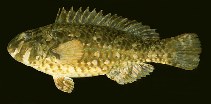
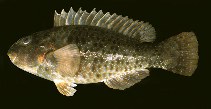
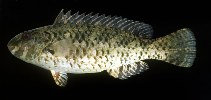
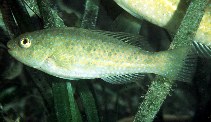
Spine dorsali (totale) : 9; Raggi dorsali molli (totale) : 10; Spine anali: 3; Raggi anali molli: 9; Vertebre: 25. This species distinguished by the following characters: median predorsal scales 4 (occasionally 3); 1 scale row on cheek, 1(4), below eye; pectoral-fin rays 13; relatively elongate, its depth 2.9-3.8 in SL; unique narrow dental plates composed of numerous small teeth. Colour when fresh, greenish or olive brown, often strongly mottled; male with midlateral white stripe (Ref. 9793, 90102).
Body shape (shape guide): fusiform / normal; Cross section: compressed.
Found in sheltered bays, harbors and lagoons (Ref. 48636). Inhabits seagrass areas or areas with hard substrates heavy with algal cover. Usually occur in small groups. Unlike other parrotfishes, males and females look very similar and do not change sex (Ref. 48636). Feeds on seagrasses and algae (Ref. 30573). Marketed fresh (Ref. 5284).
Ciclo vitale e comportamento di accoppiamento
Maturità | Riproduzione | Deposizione | Uova | Fecondità | Larve
Spawns in shallow water above grassflats on the falling tide. Investigation of sexual identity of large samples suggest the species is gonochoristic (sex-reversal do not occur), the first sparid species known to be so (Ref. 1875). Also Ref. 103751.
Bruce, R.W. and J.E. Randall, 1985. A revision of the Indo-West Pacific parrotfish genera Calotomus and Leptoscarus (Scaridae: Sparisomatinae). Indo-Pac. Fish. (5):32 p. (Ref. 525)
Stato della Lista Rossa IUCN (Ref. 130435: Version 2025-2 (Global))
Minaccia per l'uomo
Harmless
Usi umani
Pesca: commerciale; Acquario: Commerciale
Strumenti
Rapporti speciali
Scarica XML
Fonti Internet
Stime basate su modelli
Temperatura preferita (Fonte Biblio.
123201): 24.3 - 29.3, mean 28.2 °C (based on 2909 cells).
Indice di diversità filogenetica (Fonte Biblio.
82804): PD
50 = 1.0000 [Uniqueness, from 0.5 = low to 2.0 = high].
Bayesian length-weight: a=0.00977 (0.00655 - 0.01458), b=2.98 (2.87 - 3.09), in cm total length, based on LWR estimates for this species & (Sub)family-body (Ref.
93245).
Livello trofico (Fonte Biblio.
69278): 2.0 ±0.0 se; based on diet studies.
Resilienza (Fonte Biblio.
120179): Medio, tempo minimo di raddoppiamento della popolazione 1.4 - 4.4 anni (Preliminary K or Fecundity.).
Prior r = 1.20, 95% CL = 0.79 - 1.80, Based on 1 data-limited stock assessment.
Vulnerabilità della pesca (Ref.
59153): Low to moderate vulnerability (25 of 100).
🛈
Nutrienti (Ref.
124155): Calcium = 56.7 [33.8, 108.2] mg/100g; Iron = 0.738 [0.398, 1.243] mg/100g; Protein = 18.6 [16.5, 20.4] %; Omega3 = 0.0974 [, ] g/100g; Selenium = 27.8 [16.2, 52.4] μg/100g; VitaminA = 51.4 [15.8, 168.9] μg/100g; Zinc = 1.76 [1.20, 2.80] mg/100g (wet weight);