Entorno: milieu / zona climática / rango de profundidad / gama de distribución
Ecología
marino demersal; rango de profundidad 0 - 45 m (Ref. 11482). Tropical
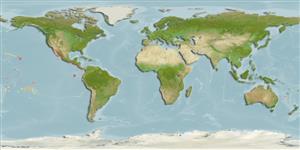
Eastern Pacific Ocean: from the Gulf of California and southwestern tip of Baja California northward to Bahia Santa Maria. Former subspecies D. pectoralis fallax (Mexico to Ecuador, including Cocos Island) and D. pectoralis insulatus (Revillagigedo Islands) in Ref. 11482 were elevated to species level.
Tamaño / Peso / Edad
Madurez: Lm ? range ? - ? cm
Max length : 5.2 cm TL macho / no sexado; (Ref. 11482)
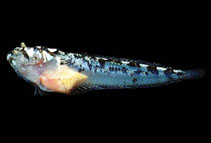
Distinguished from D. fallax and D. insulatus by having the following characters: scales absent above the lateral line; upper lip fimbriae, modally 9; preopercular canal pores, modally 5; unbranched labial fimbriae (Ref. 82814).
Body shape (shape guide): elongated.
Found on sandy bottoms near reefs (Ref. 37955). Feeds on small fishes and invertebrates (Ref. 11482). Minimum depth from Ref. 58018.
Ciclo vital y comportamiento de apareamiento
Madurez | Reproducción | Puesta | Huevos | Fecundidad | Larva
Allen, G.R. and D.R. Robertson, 1994. Fishes of the tropical eastern Pacific. University of Hawaii Press, Honolulu. 332 p. (Ref. 11482)
Situación en la Lista Roja de la UICN (Ref. 130435: Version 2025-2 (Global))
Amenaza para el ser humano
Harmless
Usos humanos
Herramientas
Informes especiales
Descargar XML
Fuentes de Internet
Estimaciones basadas en modelos
Temperatura preferida (Referencia
123201): 20.6 - 28.4, mean 24.7 °C (based on 56 cells).
Índice de diversidad filogenética (Referencia
82804): PD
50 = 0.5000 [Uniqueness, from 0.5 = low to 2.0 = high].
Bayesian length-weight: a=0.00389 (0.00180 - 0.00842), b=3.12 (2.94 - 3.30), in cm total length, based on all LWR estimates for this body shape (Ref.
93245).
Nivel trófico (Referencia
69278): 4.0 ±0.61 se; based on food items.
Vulnerabilidad pesquera (Ref.
59153): Low vulnerability (10 of 100).
🛈