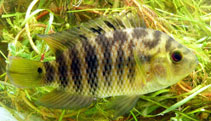
ການຈັດປະເພດ / ຊື່
ຊື່ສາມັນ | ຄຳສັບຄ້າຍຄືກັນ | Catalog of Fishes(ຕະກຸນ, ຊະນິດ) | ITIS | CoL | WoRMS | Cloffa
>
Cichliformes (Cichlids, convict blennies) >
Cichlidae (Cichlids) > Cichlinae
Etymology: Australoheros: From the Latin word 'australis' meaning southern, and the name Heros, after the nominotypic genus of the Heroini tribe.
Tribe.
More on author: Jenyns.
ສະພາບແວດລ້ອມ: ສະພາບແວດລ້ອມ / ເຂດດິນຟ້າອາກາດ / ລະດັບຄວາມເລິກ / ຂອບເຂດການແຈກຢາຍ
ນິເວດວິທະຍາ
; ນ້ຳຈືດ ກ່ຽວກັບ (ຢູ່)ເທິງຊັ້ນພື້ນດິນໃນທະເລເປີດ; pH range: 6.5 - 7.0; dH range: 5 - 12. Subtropical; 25°C - 30°C (Ref. 1672)
South America: Coastal drainages of Uruguay and Rio Grande do Sul, Brazil; Paraná River basin, lower part of Paraná River in Argentina.
ຂະໜາດ / ນ້ຳໜັກ / ອາຍຸ
ການຈະເລີນເຕັມໄວ: Lm ? range ? - ? cm
Max length : 19.3 cm SL ຕົວຜູ້/ບໍ່ມີເພດ; (Ref. 56003); common length : 18.0 cm TL ຕົວຜູ້/ບໍ່ມີເພດ; (Ref. 36377); ອາຍຸສູງສຸດທີ່ເຄຍລາຍງານມາ: 10 ປີ (Ref. 40602)
ຄີ (ໜາມ)ແຂງຢູ່ຫຼັງປາ (ທັງໝົດ) : 15 - 17; ຄີຫຼັງຂອງປາ (ຄີອ່ອນ) (ທັງໝົດ) : 9 - 11; ຄີ(ໜາມ) ແຂງຢູ່ຄີກົ້ນປາ
ກຸ່ມປາກະດູກແຂງ
ຄວາມຖີ່ຂອງກຸ່ມຖ່າຍທອດພັນ
ປາທີ່ມີການເຄື່ອນຍ້າຍຈາກທະເລໄປຫານ້ຳຈືດ ແລະນ້ຳຈືດຫາທະເລ
ປາທີ່ມີການເຄື່ອນຍ້າຍຈາກທະເລແລະໄປໄຂ່ຢູ່ນ້ຳຈືດ
ຄີກົ້ນຂອງປາ
ສັດທີ່ມີກະດູກສັນຫັຼງ
ການຖ່າຍທອດທາງກຳມະພັນຈາກພໍ່ແມ່ຫາລູກ: 5 - 7; ຄີກົ້ນຂອງປາ: 7 - 9. This species differs from its congeners in having a lower jaw longer than upper and mouth pointing upwards; has the shortest dorsal scale cover and the least scaled dorsal and anal fins among (together with A. tembe); with four abdominal bars (present in more than 80% of individuals as compared to 50% or less in all other species (Ref. 74689).
Body shape (shape guide): short and / or deep.
An opportunistic diurnal feeder, eating detritus and plant material, preying on small aquatic animals, including small fish. Very resistant to low temperatures. (Ref. 59043). Common in creeks, rivers, swamps and lakes (Ref. 74689). This species is an easy open spawner that lays its eggs on a stone or piece of wood (Ref. 12251). Both parents care for the eggs and fry (Ref. 12251). Consumed locally. Reported to reach 25.0 cm SL (Ref. 59043).
This species is an easy open spawner that lays its eggs on a stone or piece of wood. Both parents care for the eggs and fry (Ref. 12251). In Europe where it has invaded native drainages, spawns when temperature rises above 28-30°C. Forms pairs during spawning and both sexes are territorial. Females deposits eggs on exposed hard surfaces such as stones or wood. Both parent guard larvae and juveniles for 1-3 weeks (Ref. 59043).
Říčan, O. and S.O. Kullander, 2008. The Australoheros (Teleostei: Cichlidae) species of Uruguay and Paraná River drainages. Zootaxa 1724:1-51. (Ref. 74689)
ສະຖານະພາບບັນຊີແດງຂອງ IUCN (Ref. 130435: Version 2025-2 (Global))
ໄພຂົ່ມຂູ່ຕໍ່ມະນຸດ
Harmless
ການນໍາໃຊ້ຂອງມະນຸດ
ການປະມົງ: ທີ່ບໍ່ມີຄວາມສົນໃຈ; ຕູ້ປາ: ເປັນສີນຄ້າ
ເຄື່ອງມື
ບົດລາຍງານພິເສດ
ດາວໂຫລດ XML
ແຫຼ່ງອີນເຕີເນັດ
ການຄາດຄະເນໂດຍອີງໃສ່ແບບຈໍາລອງ
ດັດຊະນີຄວາມຫຼາກຫຼາຍທາງຊີວະພາບ (ເອກະສານອ້າງອີງ
82804): PD
50 = 0.5000 [Uniqueness, from 0.5 = low to 2.0 = high].
Bayesian length-weight: a=0.02512 (0.01600 - 0.03945), b=3.04 (2.91 - 3.17), in cm total length, based on LWR estimates for this species & (Sub)family-body (Ref.
93245).
ຊັ້ນເຂດຮ້ອນ (ເອກະສານອ້າງອີງ
69278): 3.3 ±0.48 se; based on food items.
ຄວາມຢືດຢຸ່ນ (ເອກະສານອ້າງອີງ
120179): ຂະໜາດກາງ, ປະຊາກອນຕຳ່ສຸດທີ່ໃຊ້ເວລາສອງເທົ່າ 1.4 - 4.4 ປີ (tmax=10; Fec=300-1,000).
ຄວາມສ່ຽງຕໍ່ການຫາປາ (Ref.
59153): Low vulnerability (14 of 100).
🛈