Περιβάλλον: περιβάλλον / κλιματική ζώνη / εύρος βάθους / εύρος διανομής
Οικολογία
Θαλασσινό(ά) βενθικό(ς); εύρος βάθους 0 - 12 m (Ref. 84085). Temperate
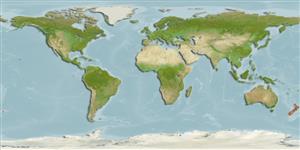
Southwest Pacific: throughout New Zealand, excluding Three Kings Islands.
Μέγεθος / Βάρος / Ηλικία
Γεννητική Ωρίμανση: Lm ? range ? - ? cm
Max length : 9.4 cm SL αρσενικό/απροσδιόριστο; (Ref. 13227)
Σύντομη περιγραφή
Κλείδες προσδιορισμού | Μορφολογία | Μορφομετρία
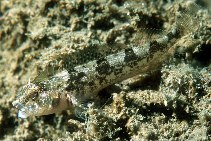
Ραχιαίες άκανθες (συνολικά) : 23 - 28; Μαλακές ραχιαίες ακτίνες (συνολικά) : 13 - 15; Εδρικές άκανθες: 1 - 2; Μαλακές εδρικές ακτίνες: 24 - 27; Σπόνδυλοι: 43 - 45. Sloping snout profile, concave or (rarely) steep. Line from tip of premaxilla continued beyond ventral margin of orbit crossing preoperculum or touching its dorsal extremity. No groove
in front of first dorsal fin, although medial sensory pore sits at base of depression; nape naked or with superficial or embedded cycloid scales. Dorsal fin formula V-0N-0-1-0-1(35). Nine procurrent rays in upper lobe, seven in lower lobe; in upper caudal lobe, one large ray between upper lobe and posterior epural, six rays opposite epurals, one ray opposite neural spine of third preural vertebra, one ray anterior to neural spine of third preural vertebra; in lower caudal lobe, six rays opposite haemal spine of second preural vertebra, one ray opposite haemal spine of third preural vertebra (Ref. 84085).
Body shape (shape guide): elongated.
Facultative air-breathing in the genus (Ref. 126274); Adults are found on sheltered coastal reefs and rock and shell substrata in bays and harbors; from intertidal pools to at least 12m (Ref. 84085). They feed on small benthic organisms. Prey is stalked and swallowed whole (Ref. 26966). Eggs are hemispherical and covered with numerous sticky threads that anchor them in the algae on the nesting sites (Ref. 240). Larvae are planktonic which occur primarily in shallow, nearshore waters (Ref. 94114).
Κύκλος ζωής και συμπεριφορά ζευγαρώματος
Γεννητική Ωρίμανση | Αναπαραγωγή | Γεννοβολία | Αβγά | Γονιμότητα | Προνύμφες
Fricke, R., 1994. Tripterygiid fishes of Australia, New Zealand and the southwest Pacific Ocean (Teleostei). Theses Zool. 24:1-585. (Ref. 13227)
Κατάσταση Κόκκινου Καταλόγου IUCN (Ref. 130435: Version 2025-2 (Global))
Απειλή για τον άνθρωπο
Harmless
Ανθρώπινες χρήσεις
αλιεία: χωρίς ενδιαφέρον
Εργαλεία
Ειδικές εκθέσεις
Λήψη XML
Διαδικτυακές πηγές
Εκτιμήσεις βάσει μοντέλων
Προτιμώμενη θερμοκρασία (Αναφ.
123201): 13 - 18.7, mean 16.1 °C (based on 117 cells).
Δείκτης φυλογενετικής ποικιλότητας (Αναφ.
82804): PD
50 = 0.5039 [Uniqueness, from 0.5 = low to 2.0 = high].
Bayesian length-weight: a=0.00617 (0.00290 - 0.01310), b=3.04 (2.86 - 3.22), in cm total length, based on LWR estimates for this (Sub)family-body shape (Ref.
93245).
Τροφικό Επίπεδο (Αναφ.
69278): 3.3 ±0.0 se; based on diet studies.
Ελαστικότητα (Αναφ.
120179): Υψηλό, ελάχιστος χρόνος για διπλασιασμό πληθυσμού < 15 μήνες (Preliminary K or Fecundity.).
Ευπάθεια στην αλιεία (Ref.
59153): Low vulnerability (10 of 100).
🛈
Θρεπτικά συστατικά (Ref.
124155): Calcium = 167 [89, 427] mg/100g; Iron = 0.682 [0.361, 1.352] mg/100g; Protein = 18 [17, 19] %; Omega3 = 0.397 [0.177, 0.880] g/100g; Selenium = 9.75 [3.92, 23.81] μg/100g; VitaminA = 15.3 [3.5, 66.4] μg/100g; Zinc = 1.15 [0.73, 1.77] mg/100g (wet weight);