Ambiente: milieu / zona climatica / distribuzione batimetrica / gamma di distribuzione
Ecologia
; acqua dolce benthopelagico; pH range: 7.0 - 7.5; dH range: 10 - 20. Tropical; 26°C - 30°C (Ref. 2059)
Central and South America: Pacific drainage system from Darien, Panama to Rio Cauca, Colombia as well as in Lake Maracaibo, Venezuela. Known from the Catatumbo River (Ref. 26543).
Dimensione / Peso / Età
Maturità: Lm ? range ? - ? cm
Max length : 3.0 cm TL maschio/sesso non determinato; (Ref. 26543); 6.0 cm NG (female)
Breve descrizione
Chiavi di identificazione | Morfologia | Morfometria
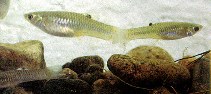
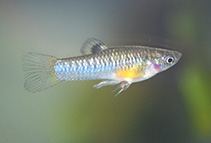
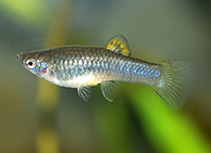
Identified by the black spot found on the base of the dorsal fin; some specimens with thin transverse bands along the body but this may be attributed to the coloration before or after the reproductive period (Ref. 26543).
Body shape (shape guide): fusiform / normal.
Feeds on algae and insects end up in the water (Ref. 26543). Tolerates extreme temperature, salinity and anoxia conditions (Ref. 26543). There was a proposal to use this species as biological control against mosquito larvae (Ref. 26543).
Ciclo vitale e comportamento di accoppiamento
Maturità | Riproduzione | Deposizione | Uova | Fecondità | Larve
Produces 10 to 25 young after a gestation period of about 28 days. Young cared for by the male (Ref. 26543).
Wischnath, L., 1993. Atlas of livebearers of the world. T.F.H. Publications, Inc., United States of America. 336 p. (Ref. 26130)
Stato della Lista Rossa IUCN (Ref. 130435: Version 2025-2 (Global))
Minaccia per l'uomo
Harmless
Usi umani
Strumenti
Rapporti speciali
Scarica XML
Fonti Internet
Stime basate su modelli
Indice di diversità filogenetica (Fonte Biblio.
82804): PD
50 = 0.5000 [Uniqueness, from 0.5 = low to 2.0 = high].
Bayesian length-weight: a=0.01288 (0.00551 - 0.03009), b=3.14 (2.96 - 3.32), in cm total length, based on LWR estimates for this Genus-body shape (Ref.
93245).
Livello trofico (Fonte Biblio.
69278): 2.6 ±0.26 se; based on food items.
Resilienza (Fonte Biblio.
120179): Alto, tempo minimo di raddoppiamento della popolazione meno di 15 mesi (Preliminary K or Fecundity.).
Vulnerabilità della pesca (Ref.
59153): Low vulnerability (10 of 100).
🛈