>
Cichliformes (Cichlids, convict blennies) >
Cichlidae (Cichlids) > Pseudocrenilabrinae
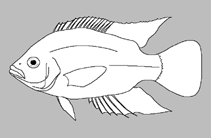
Etymology: Xenotilapia: Greek, xenos = strange + Bechuana, African native thiape = fish (Ref. 45335); rotundiventralis: rotundiventralis is derived from the Latin rotundus for round and ventralis for pelvic, in reference to its rounded distal margin of pelvic fin.
Environnement : milieu / zone climatique / profondeur / gamme de distribution
Écologie
; eau douce démersal; profondeur 9 - 11 m (Ref. 26454). Tropical; 24°C - 28°C (Ref. 12468)
Africa: endemic to Lake Tanganyika, present in the southern and southeastern part of the lake (Ref. 46829).
Taille / Poids / Âge
Maturité: Lm ? range ? - ? cm
Max length : 5.3 cm SL mâle / non sexé; (Ref. 26454)
Occurs in shallow, intermediate habitats where the bottom is mainly sand with some rocks (Ref. 46829). Forms slow-moving schools (Ref. 26454) of sometimes more than 1.000 individuals (Ref. 26454, 46829). Feed exclusively on zooplankton (Ref. 26454, 46829) and pick out individual organisms with their rather protractible mouths (Ref. 46829). Parental mouthbrooding is very common by both male and female adults; the young, of about 6 mm SL, are solely mouthbrooded by females; young which had become separated from the parent are found with other cichlid broods e.g. Lepidiolamprologus elongatus and Perissodus microlepis (Ref. 26454).
Cycle de vie et comportement reproducteur
Maturité | Reproduction | Frai | Œufs | Fécondité | Larves
Takahashi, T., Y. Yanagisawa and K. Nakaya, 1997. Microdontochromis rotundiventralis, a new cichlid fish (Perciformes: Cichlidae) from Lake Tanganyika. Ichthyol. Res. 44(2):109-117. (Ref. 26454)
Statut dans la liste rouge de l'IUCN (Ref. 130435: Version 2025-2 (Global))
Menace pour l'homme
Harmless
Utilisations par l'homme
Pêcheries: sans intérêt
Outils
Articles particuliers
Télécharger en XML
Sources Internet
Estimations basées sur des modèles
Indice de diversité phylogénétique (Réf.
82804): PD
50 = 0.5000 [Uniqueness, from 0.5 = low to 2.0 = high].
Bayesian length-weight: a=0.00389 (0.00180 - 0.00842), b=3.12 (2.94 - 3.30), in cm total length, based on all LWR estimates for this body shape (Ref.
93245).
Niveau trophique (Réf.
69278): 3.4 ±0.45 se; based on food items.
Résilience (Réf.
120179): Haut, temps minimum de doublement de population inférieur à 15 mois (Preliminary K or Fecundity.).
Vulnérabilité de la pêche (Ref.
59153): Low vulnerability (10 of 100).
🛈