محیط زیست: محیط زیست / منطقه آب و هوایی / تغييرات عمق / محدوده توزیع
بوم شناسي
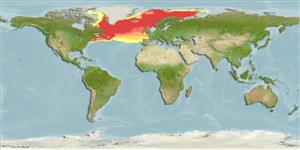
دريايي pelagic-oceanic; اقیانوس رو (Ref. 51243); تغييرات عمق 100 - 1000 m, usually 100 - 500 m (Ref. 35388). Temperate; 3°C - 7°C (Ref. 35388); 79°N - 39°N, 75°W - 71°E
Eastern Atlantic: Kattegat and North Sea, northward to Spitsbergen, southern part of Barents Sea eastward to Kanin Banks and Novaya Zemlya, rare in White Sea, Iceland and eastern Greenland. Western Atlantic: Greenland and southeastern Labrador in Canada to New Jersey in USA (Ref. 7251).
طول در اولین بلوغ / اندازه / وزن / سن
بلوغ: Lm 38.9, range 38 - 41 cm
Max length : 100.0 cm TL جنس نر / بدون خواص جنسي; (Ref. 4570); common length : 45.0 cm TL جنس نر / بدون خواص جنسي; (Ref. 4570); بيشينه وزن گزارش شده: 15.0 kg (Ref. 35388); بيشينه سن گزارش شده: 60 سال ها (Ref. 35388)
Found off the coast from 100-1000 m; juveniles found in fjords, bays and inshore waters. Normally trawled in deep water (Ref. 9988). Benthic (Ref. 5951). Feed mostly on euphausiids in summer; herrings in autumn and winter; capelins, herrings, euphausiids and ctenophores in spring. Gregarious throughout life. A slow growing species (Ref. 9988). Ovoviviparous, gonads of male and female do not mature at the same time. The spermatozoa are kept in the ovary of the female after copulation until such time that the eggs ripen paving the way for fertilization (Ref. 74488). Copulation takes place in late summer or early autumn (Ref. 35388, 34817); in winter females give birth to 50,000-350,000 pelagic larvae of 8 mm length (Ref. 35388). Utilized fresh and frozen; eaten fried, broiled, microwaved and baked (Ref. 9988).
Gonads of male and female do not mature at the same time. The spermatozoa are kept in the ovary of the female after copulation until such time that the eggs ripen paving the way for fertilisation (Ref. 74488). Gives birth to 50,000-350,000 pelagic larvae of 8 mm length (Ref. 35388).
Fernholm, B. and A. Wheeler, 1983. Linnaean fish specimens in the Swedish Museum of Natural History, Stockholm. Zool. J. Linn. Soc., 78(3):199-286. (Ref. 83993)
وضعيت در فهرست قرمز IUCN (Ref. 130435: Version 2025-2 (Global))
خطر برای انسان ها
Reports of ciguatera poisoning (Ref. 30911)
استفاده انسانی
ماهي گيري – شيلات: با ارزش تجاري بالا; ماهي ها ي سرگرم كننده: بله
ابزارها
گزارش های ويژه
بارگيری XML
منابع اينترنتي
تخمینها بر اساس مدلها
دمای ترجیحی (مرجع
123201): 0.6 - 9.3, mean 3.7 °C (based on 1514 cells).
شاخص تنوع فیلوژنتیکی (مرجع
82804): PD
50 = 0.5000 [Uniqueness, from 0.5 = low to 2.0 = high].
Bayesian length-weight: a=0.01413 (0.00662 - 0.03015), b=3.04 (2.86 - 3.22), in cm total length, based on LWR estimates for this Genus-body shape (Ref.
93245).
سطح تروفیک (مرجع
69278): 4.0 ±0.68 se; based on food items.
جهندگی (مرجع
120179): پايين ، كم, كمينه زمان لازم براي دو برابر شدن جمعيت 5/4 – 14 سال (rm=0.23; K=0.06-0.08; tm=10-12; tmax=60; Fec= 19,000-350,000).
Prior r = 0.30, 95% CL = 0.20 - 0.45, Based on 5 full stock assessments.
آسیبپذیری ماهیگیری (Ref.
59153): High to very high vulnerability (71 of 100).
🛈
آسیبپذیری اقلیمی (Ref.
125649): High to very high vulnerability (69 of 100).
🛈
مواد مغذی (Ref.
124155): Calcium = 12.3 [5.5, 33.4] mg/100g; Iron = 0.23 [0.10, 0.51] mg/100g; Protein = 18.3 [17.1, 19.5] %; Omega3 = 1.29 [0.51, 3.25] g/100g; Selenium = 44.8 [19.0, 116.1] μg/100g; VitaminA = 20.7 [6.3, 68.0] μg/100g; Zinc = 0.342 [0.187, 0.613] mg/100g (wet weight); based on
nutrient studies.