分类 / 名称
俗名 | 同种异名 | Catalog of Fishes(属, 种) | ITIS | CoL | WoRMS | Cloffa
Teleostei >
Siluriformes (Catfishes) >
Loricariidae (Armored catfishes) > Loricariinae
Eponymy: Charles Frederick Hartt (1840–1878) was a Canadian geologist, palaeontologist and naturalist, who was a member of the Thayer Expedition (1865–1866) to Brazil, a country in which he was a specialist. [...] Sigismund Ernst Richard (Ricardo) Krone (1861–1917) was born in Dresden, Germany, but left there for Brazil (1884), settling in Iguape where he opened a pharmacy. [...] (Ref. 128868), visit book page.
环境:氛围 / 气候带 / 深度上下限 / 分布范围
生态学
; 淡水 居于水底的. 熱帶; 22°C - 24°C (Ref. 13614)
分布
领土 | FAO区域 | 生态系 | 标本纪录 | 分布图 | 简介 | Faunafri
South America: Ribeira de Iguape River basin in Brazil.
南美洲: Ribeira de Iguape 河流域。
大小 / 重量 / 年龄
成熟度: Lm ? range ? - ? cm
Max length : 12.0 cm SL 雄鱼/尚未辨别雌雄; (Ref. 36389)
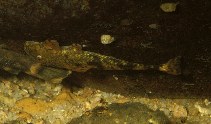
Inhabits streams with rocky and sandy bottom; in shallow and deeper (up to 0.7 m) areas with water flow up to 70 cm per second. Forages at night, although occasional diurnal activity is also recorded. Grazes on microscopic algae, mostly diatoms and green algae growing on rugged and light-colored rocks, and submersed vegetation. Chironomid and simuliid larvae, as well as tiny crustaceans, are recorded in its diet. Before grazing on a patch with dense sediment, the fish makes wiggling head-down movements, which raise sediment and blown away by the water current. When scraping algae off the substrate, the fish makes vigorous mouth movements and jerky movements, probably related to its mouth making alternate grazing and attaching to the substrate. Density may reach about 0.1 fish per square meter both in shaded and sunned stream stretches (Ref. 26630).
栖息于溪流有岩石的与沙质底部; 在浅滩中而且更深地 (向上到 0.7 公尺) 水流大于 70 公分每秒。 觅食在晚上,虽然偶然的日行性活动也被记录。 啃食生长在微小的藻类,大部分是硅藻与绿藻上的高低不平的与颜色较淡岩石 , 与生长水中的植物。 宝刀鱼与 simuliid 仔鱼, 以及极小的甲壳动物,在它的食性被记录。 在有密集沉淀物的地方上的啃食之前,鱼头部向下制造摆动运动, 蓄养沉淀物而且吹走藉由水流。 当啃食藻类的时候在底部上, 鱼作强有力的嘴运动与急动的运动, 可能与制造交互的啃食而且吸附到底部的它的嘴有关。 密度可能达到大约每平方公尺 0.1个鱼在阴暗而有日照的水流支流中.(参考文献 26630)
生命周期和交配行为
成熟度 | 繁殖 | 产卵场 | 卵 | 孕卵数 | 仔鱼
南美洲: Ribeira de Iguape 河流域。
Ferraris, C.J. Jr., 2003. Loricariidae - Loricariinae (Armored catfishes). p. 330-350. In R.E. Reis, S.O. Kullander and C.J. Ferraris, Jr. (eds.) Checklist of the Freshwater Fishes of South and Central America. Porto Alegre EDIPUCRS, Brasil. (Ref. 36389)
世界自然保护联盟红皮书 (Ref. 130435: Version 2025-2 (Global))
人类利用
渔业: 没有兴趣
工具
特别资料
下载 XML
网络资源
基于模型的估算
系统发育多样性指数 (参考文献
82804): PD
50 = 0.5000 [Uniqueness, from 0.5 = low to 2.0 = high].
Bayesian length-weight: a=0.00589 (0.00267 - 0.01297), b=3.07 (2.90 - 3.24), in cm total length, based on LWR estimates for this Genus-body shape (Ref.
93245).
营养阶层 (参考文献
69278): 2.2 ±0.13 se; based on food items.
回复力 (参考文献
120179): 中等的, 族群倍增时间最少 1.4 - 4.4年 (Preliminary K or Fecundity.).
渔业脆弱性 (Ref.
59153): Low vulnerability (10 of 100).
🛈