分類 / 名前
共通名の | 類義語 | Catalog of Fishes(部類, 種) | ITIS | CoL | WoRMS | Cloffa
>
Siluriformes (Catfishes) >
Mochokidae (Squeakers or upside-down catfishes) > Chiloglanidinae
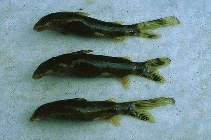
Etymology: Chiloglanis: Greek, cheilos = lip + Greek, glanis = a fish that can eat the bait without touching the hook; a cat fish (Ref. 45335); asymetricaudalis: The name refers to the asymmetrical caudal fin, the superior caudal lobe being distinctly more developed than the inferior lobe (Ref.27627).
環境:環境 / 気候帯 / 深さの範囲 / 分布範囲
生態学
; 新鮮な水 底生の漂泳性. Tropical
Africa: present in the Rusizi River basin (Ref. 27627), but also found in the Luiche River drainage in Tanzania (Ref. 27292, 87986).
サイズ / 重さ / 年齢
成熟: Lm ? range ? - ? cm
Max length : 7.6 cm SL オス/雌雄の選別がない; (Ref. 27627)
Occurs rocky or sandy-rocky substrates of rivers with rapidly flowing waters; feeds on algae which grow on rocks in the river and cascades; is probably also an insectivore since some specimens which were examined showed the presence of insect larvae in their stomachs (Ref. 27627). Oviparous (Ref. 205).
ライフサイクルと交尾行動
成熟 | 繁殖 | 放精 | 卵 | 生産力 | 幼生
Oviparous (Ref. 205). Distinct pairing during breeding (Ref. 205).
De Vos, L., 1993. Le genre Chiloglanis (Siluriformes, Mochokidae) dans le bassin de la Ruzizi: description de deux nouvelles espèces. J. Afr. Zool. 107-153-168. (Ref. 27627)
IUCNのレッドリストの状況は (Ref. 130435: Version 2025-2 (Global))
絶滅危惧 (EN) (B2ab(ii,iii)); Date assessed: 31 January 2006
人間の用途
水産業: 興味がない
用具
特記事項
XMLをダウンロードして下さい
インターネットの情報源
モデルに基づく推定値
系統多様性指数 (参照
82804): PD
50 = 0.5000 [Uniqueness, from 0.5 = low to 2.0 = high].
Bayesian length-weight: a=0.00389 (0.00180 - 0.00842), b=3.12 (2.94 - 3.30), in cm total length, based on all LWR estimates for this body shape (Ref.
93245).
栄養段階 (参照
69278): 2.6 ±0.26 se; based on food items.
回復力 (参照
120179): 高い, 15か月以下の倍増期間の最小個体群 (Preliminary K or Fecundity.).
漁業の脆弱性 (Ref.
59153): Low vulnerability (10 of 100).
🛈