>
Anguilliformes (Eels and morays) >
Ophichthidae (Snake eels) > Myrophinae
Etymology: Muraenichthys: Latin,muraena = morey eel + Greek, ichtys = fish (Ref. 45335); philippinensis: Named for its country of type, the Philippines.
More on authors: Schultz & Woods.
Ambiente: milieu / zona climatica / distribuzione batimetrica / gamma di distribuzione
Ecologia
marino demersale; distribuzione batimetrica ? - 59 m (Ref. 58018). Tropical
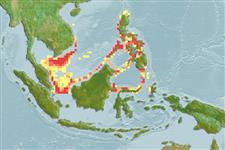
Western Central Pacific: Philippines.
Dimensione / Peso / Età
Maturità: Lm ? range ? - ? cm
Max length : 30.0 cm TL maschio/sesso non determinato; (Ref. 90102)
Breve descrizione
Chiavi di identificazione | Morfologia | Morfometria
Vertebre: 128 - 130.
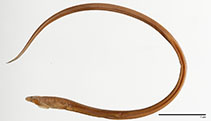
Body shape (shape guide): eel-like; Cross section: circular.
Cryptic species, inhabits sandy substrates (Ref 90102).
Ciclo vitale e comportamento di accoppiamento
Maturità | Riproduzione | Deposizione | Uova | Fecondità | Larve
Smith, D.G. and J.E. McCosker, 1997. Ophichthidae. Snake eels, worm eels. p. 1662-1669. In K.E. Carpenter and V.H. Niem (eds.) FAO species identification guide for fishery purposes. The living marine resources of the WCP. Vol. 3. Batoid fishes, chimaeras and bony fishes part 1 (Elopidae to Linophrynidae). FAO, Rome. (Ref. 39782)
Stato della Lista Rossa IUCN (Ref. 130435: Version 2025-2 (Global))
Minaccia per l'uomo
Harmless
Usi umani
Pesca: di nessun interesse
Strumenti
Rapporti speciali
Scarica XML
Fonti Internet
Stime basate su modelli
Temperatura preferita (Fonte Biblio.
123201): 28 - 29.1, mean 28.6 °C (based on 66 cells).
Indice di diversità filogenetica (Fonte Biblio.
82804): PD
50 = 0.5039 [Uniqueness, from 0.5 = low to 2.0 = high].
Bayesian length-weight: a=0.00076 (0.00029 - 0.00201), b=3.06 (2.83 - 3.29), in cm total length, based on LWR estimates for this (Sub)family-body shape (Ref.
93245).
Livello trofico (Fonte Biblio.
69278): 4.0 ±0.7 se; based on size and trophs of closest relatives
Resilienza (Fonte Biblio.
120179): Alto, tempo minimo di raddoppiamento della popolazione meno di 15 mesi (Preliminary K or Fecundity.).
Vulnerabilità della pesca (Ref.
59153): Low vulnerability (20 of 100).
🛈