>
Ophidiiformes (Cusk eels) >
Bythitidae (Livebearing brotulas)
Etymology: Barathronus: Greek, barathron = abyss + ending -ites, that lives there; the Barathron was a deep pit in Athens where criminals were thrown; 1849 +Greek, onos = hake.
More on authors: Goode & Bean.
Environnement : milieu / zone climatique / profondeur / gamme de distribution
Écologie
marin bathypélagique; profondeur 366 - 3270 m (Ref. 121928), usually 366 - 1640 m (Ref. 34024). Deep-water
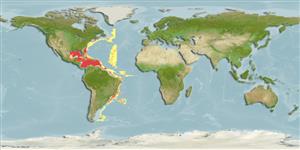
Western Central Atlantic: Gulf of Mexico and the Caribbean Sea.
Taille / Poids / Âge
Maturité: Lm ? range ? - ? cm
Max length : 14.0 cm SL mâle / non sexé; (Ref. 121928)
Description synthétique
Clés d'identification | Morphologie | Morphométrie
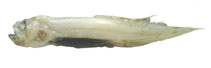
Rayons mous dorsaux (Total) : 62 - 78; Rayons mous anaux: 46 - 59; Vertèbres: 68 - 75. Barathronus bicolor differs from the other five species of the genus with dark-pigmented peritoneum by the following combination of characters: D 62-78, A 46-59, pectoral-fin rays 22-27, anterior gill arch with 28-35 long rakers; vertebrae, precaudal 31-36, total 68-75; vomer with 1-5 fangs; paired bulbs at basis of penis not developed; no ventral flexure of anteriormost vertebrae; penis in ripe specimens long (up to 15% SL) and slender; fresh specimens light brownish with dark-blue peritoneum; otolith almost circular three times as long as thick and centrally placed sulcus 3-4 times in length of otolith (Ref. 121928).
Cross section: compressed.
Common species (Ref. 34024).
Cycle de vie et comportement reproducteur
Maturité | Reproduction | Frai | Œufs | Fécondité | Larves
Nielsen, J.G., 2019. Revision of the circumglobal genus Barathronus (Ophidiiformes, Bythitidae) with a new species from the eastern North Atlantic Ocean. Zootaxa 4679(2):231-256. (Ref. 121928)
Statut dans la liste rouge de l'IUCN (Ref. 130435: Version 2025-2 (Global))
Menace pour l'homme
Harmless
Utilisations par l'homme
Pêcheries: sans intérêt
Outils
Articles particuliers
Télécharger en XML
Sources Internet
Estimations basées sur des modèles
Température préférée (Réf.
123201): 4.8 - 10.4, mean 6.3 °C (based on 143 cells).
Indice de diversité phylogénétique (Réf.
82804): PD
50 = 0.5005 [Uniqueness, from 0.5 = low to 2.0 = high].
Bayesian length-weight: a=0.00479 (0.00192 - 0.01191), b=3.03 (2.81 - 3.25), in cm total length, based on LWR estimates for this (Sub)family-body shape (Ref.
93245).
Niveau trophique (Réf.
69278): 3.4 ±0.5 se; based on size and trophs of closest relatives
Résilience (Réf.
120179): Haut, temps minimum de doublement de population inférieur à 15 mois (Preliminary K or Fecundity.).
Vulnérabilité de la pêche (Ref.
59153): Low vulnerability (10 of 100).
🛈