>
Ophidiiformes (Cusk eels) >
Bythitidae (Livebearing brotulas)
Etymology: Barathronus: Greek, barathron = abyss + ending -ites, that lives there; the Barathron was a deep pit in Athens where criminals were thrown; 1849 +Greek, onos = hake.
Eponymy: The research vessel ‘Anton Bruun’, from which the holotypes of these species were collected, is named after the Danish oceanographer and marine biologist Dr Anton Frederik Bruun (above). [...] (Ref. 128868), visit book page.
More on author: Nielsen.
Umwelt: Milieu / Klimazone / Tiefenbereich / Verbreitungsgebiet
Ökologie
seewasser bathypelagisch; tiefenbereich 0 - 1710 m (Ref. 123477). Deep-water
Southwest Indian Ocean. High Seas only.
Größe / Gewicht / Alter
Geschlechtsreife: Lm ? range ? - ? cm
Max length : 3.9 cm SL (female)
Kurzbeschreibung
Bestimmungsschlüssel | Morphologie | Morphometrie
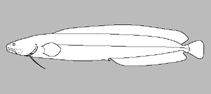
Rückenflossenweichstrahlen (insgesamt) : 81; Afterflossenweichstrahlen: 73; Wirbelzahl: 86. This species is distinguished from the other five Barathronus species with pigmented peritoneum by the following set of characters: D 81, A 73, pectoral-fin rays 25; anterior gill arch with 33 long rakers; vertebrae, precaudal 36, total 86; no ventral flexure of anteriormost vertebrae; vomer with 3 fangs; with a distinct brown streak in midline of body and a concentration of brown pigment between dorsal fin and nape; rounded, 1 mm long otoliths seen through of the skull (Ref. 121928).
Cross section: compressed.
Rare species (Ref. 34024).
Lebenszyklus und Paarungsverhalten
Geschlechtsreife | Fortpflanzung | Ablaichen | Eier | Fruchtbarkeit | Larven
Nielsen, J.G., 2019. Revision of the circumglobal genus Barathronus (Ophidiiformes, Bythitidae) with a new species from the eastern North Atlantic Ocean. Zootaxa 4679(2):231-256. (Ref. 121928)
IUCN Rote Liste Status (Ref. 130435: Version 2025-2 (Global))
Bedrohung für Menschen
Harmless
Nutzung durch Menschen
Fischereien: nicht kommerziell
Tools
Zusatzinformationen
Download XML
Internet Quellen
Schätzungen auf der Grundlage von Modellen
Phylogenetischer Diversitätsindex (Ref.
82804): PD
50 = 0.5005 [Uniqueness, from 0.5 = low to 2.0 = high].
Bayesian length-weight: a=0.00479 (0.00192 - 0.01191), b=3.03 (2.81 - 3.25), in cm total length, based on LWR estimates for this (Sub)family-body shape (Ref.
93245).
Trophische Ebene (Ref.
69278): 3.2 ±0.5 se; based on size and trophs of closest relatives
Widerstandsfähigkeit (Ref.
120179): hoch, Verdopplung der Population dauert weniger als 15 Monate. (Preliminary K or Fecundity.).
Anfälligkeit der Fischerei (Ref.
59153): Low vulnerability (10 of 100).
🛈