Bathycongrus macrocercus

You can sponsor this page

Bathycongrus macrocercus (Alcock, 1894)

আপনার পর্যবেক্ষণ যোগ করুন Fish Watcher
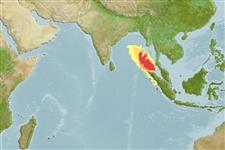
Native range
This map was computer-generated and has not yet been reviewed.
Bathycongrus macrocercus   AquaMaps   Data sources: GBIF OBIS
আপনার আপলোড করুন ছবি এবং ভিডিও
Google image
Image of Bathycongrus macrocercus
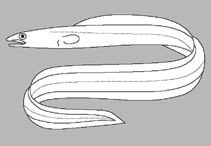
No image available for this species;
drawing shows typical species in Congridae.

শ্রেণীবিভাগ / নাম প্রচলিত নাম সমূহ | প্রতিনাম সমূহ | Catalog of Fishes(গণ , প্রজাতি ) | ITIS | CoL | WoRMS | Cloffa

> Anguilliformes (Eels and morays) > Congridae (Conger and garden eels) > Congrinae
Etymology: Bathycongrus: Greek, bathys = deep + Latin, conger = conger (Ref. 45335).
More on author: Alcock.

পরিবেশ: পরিবেশ / জলবায়ু অঞ্চল / গভীরতার পরিসীমা / বিতরণ পরিসীমা বাস্তুসংস্থান

সামুদ্রিক ব্যথিডিমারসাল সমুদ্র তলদেশবিহারী. Deep-water

বিতরণ অঞ্চল | এফ এ ও এলাকাসমূহ | বাস্তুতন্ত্র | দৃষ্টিগোচর | মানচিত্র নির্দেশ করুন | প্রচলন | Faunafri

Eastern Indian Ocean: Andaman Islands.

আকৃতি / ওজন / বয়স

পরিপক্কতা : Lm ?  range ? - ? cm

সংক্ষিপ্ত বিবরণ সনাক্তকারী নির্দেশক | বহিঃ অঙ্গ সংস্থান | মরফোমেট্রিক্স

Origin of dorsal fin above front margin of pectoral base. Vomerine teeth small with 2-4 slightly enlarged. Vomerine patch oval, almost circular, reaching opposite from of second IO pore.
Body shape (shape guide): eel-like.

জীববিজ্ঞান     শব্দকোষ (উদাহরণ স্বরূপ epibenthic)

জীবনচক্র এবং প্রজনন আচরণ পরিপক্কতা | প্রজনন | ডিম ছাড়া | ডিমসমূহ | ডিম্বধারন ক্ষমতা | শুককীট

প্রধান তথ্যসূত্র আপনার রেফারেন্স আপলোড করুন | সূত্র সংখ্যা | সমম্বয়কারী | সহযোগী

Ben-Tuvia, A., 1993. A review of the Indo-west Pacific congrid fishes of genera Rhynchoconger and Bathycongrus with the description of three new species. Isr.l J. Zool. 39:349-370. (Ref. 7446)

আইইউসিএন রেড লিস্টের অবস্থা (Ref. 130435: Version 2025-2 (Global))

  Least Concern (LC) ; Date assessed: 15 August 2011

CITES

Not Evaluated

CMS (Ref. 116361)

Not Evaluated

মানুষের জন্য হুমকি

  Harmless


মানুষের ব্যবহার

FAO - Publication: search | FishSource |

আরো তথ্য

ট্রফিক বাস্তুতন্ত্র
খাদ্যদ্রব্য (শিকার)
পথ্য উপাদান
খাদ্য গ্রহণ
খাদ্য রেশন
শিকারী প্রাণী সমূহ
বাস্তুসংস্থান
বাস্তুসংস্থান
জনসংখ্যার গতিশীলতা
বৃদ্ধির পরামিতি
সর্বোচ্চ বয়স / আকার
দৈর্ঘ্য-ওজন সম্পর্ক।
দৈর্ঘ্য-দৈর্ঘ্য rel.
দৈর্ঘ্য-ফ্রিকোয়েন্সি
গণ রূপান্তর
নির্বাচন
প্রাচুর্য
জীবনচক্র
প্রজনন
পরিপক্কতা
পরিপক্কতা/গিলস সম্পর্কিত।
ডিম্বধারন ক্ষমতা
ডিম ছাড়া
ডিম পাড়ার সমষ্টি
ডিমসমূহ
ডিমের বিকাশ
শুককীট
শুককীটের সত্রিুয়তা
বিতরণ
অঞ্চল
এফ এ ও এলাকাসমূহ
বাস্তুতন্ত্র
দৃষ্টিগোচর
প্রচলন
BRUVS - ভিডিও
অ্যানাটমি
ফুলকা এলাকা
মস্তিষ্ক
ওটোলিথ
শারীরবিদ্যা
শরীরের গঠন
পৌষ্টিক উপাদান
অম্লজান ব্যবহার
সাঁতারের ধরণ
সাতাঁরের গতি
ভিজ্যুয়াল রঙ্গক
মাছের শব্দ
রোগ এবং পরজীবী
বিষাক্ততা (LC50s)
বংশানুগতিবিদ্যা
জিনোম
বংশানুগতিবিদ্যা
হেটেরোজাইগোসিটি
উতরাধিকার সুত্রে পাওয়া যোগ্যতা
জিনগত বৈচিত্র্য
মানব সম্পর্কিত
জলজ চাষ ব্যবস্থা
একুয়াকালচার নকশাসমূহ
বংশ
সিগুয়েটেরার কেস
ডাকটিকিট, মুদ্রা, বিবিধ।
প্রচার
সহযোগী
সূত্র সংখ্যা
সূত্র সংখ্যা

হাতিয়ার

বিশেষ প্রতিবেদন

XML ডাউনলোড করুন

ইন্টারনেট সুত্র

AFORO (otoliths) | Aquatic Commons | BHL | Cloffa | Websites from users | Check FishWatcher | CISTI | Catalog of Fishes: গণ , প্রজাতি | DiscoverLife | ECOTOX | FAO - Publication: search | Faunafri | Fishipedia | Fishtrace | GloBI | Google Books | Google Scholar | Google | IGFA World Record | OneZoom | Open Tree of Life | Otolith Atlas of Taiwan Fishes | PubMed | Reef Life Survey | Socotra Atlas | TreeBase | জীবন বৃক্ষ | Wikipedia: Go, অনুসন্ধান | World Records Freshwater Fishing | জুলজিকাল রেকর্ড

মডেলের উপর ভিত্তি করে অনুমান

ফাইলোজেনেটিক বৈচিত্র্য সূচক (সূত্র 82804):  PD50 = 0.5000   [Uniqueness, from 0.5 = low to 2.0 = high].
Bayesian length-weight: a=0.00062 (0.00029 - 0.00132), b=3.19 (3.01 - 3.37), in cm total length, based on LWR estimates for this (Sub)family-body shape (Ref. 93245).
ট্রফিক পর্যায়ে (সূত্র 69278):  3.8   ±0.5 se; based on size and trophs of closest relatives
স্থিতিস্থাপক (সূত্র 120179):  মাধ্যম , সর্বনিম্ন প্রজন দ্বিগুনের সময় ১.৪-৪.৪ বৎসর (Preliminary K or Fecundity.).
মাছ ধরার ঝুঁকিপূর্ণতা (Ref. 59153):  Low to moderate vulnerability (29 of 100). 🛈