Elasmobranchii (haaien en roggen) (sharks and rays) >
Orectolobiformes (Carpet sharks) >
Hemiscylliidae (Bamboo sharks)
Etymology: Hemiscyllium: hemi-, from hemisys (Gr.), half, presumably referring to similarity and/ or close affinity to Scyllium (=Scyliorhinus, now in Scyliorhinidae) and/or Chiloscyllium; skylion, Greek for dogfish or small shark (See ETYFish); freycineti: In honor of French Navy officer Louis de Freycinet (1779-1841), commander of the expedition during which holotype was collected (See ETYFish).
Eponymy: Captain Louis Claude de Saules de Freycinet (1779–1841) was a French navigator who was involved in mapping the Western Australian coast (1803). [...] (Ref. 128868), visit book page.
More on authors: Quoy & Gaimard.
Milieu: milieu / Klimaatzone / Diepte / verspreidingsgebied
Ecologie
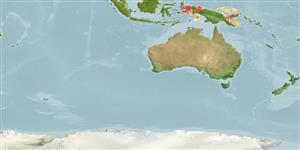
marien rifbewoner; diepte 0 - 12 m (Ref. 90102). Tropical; 0°S - 10°S, 128°E - 153°E
Western Pacific: Irian Jaya, Waigeo (Indonesia) and Papua New Guinea.
Grootte / Gewicht / Leeftijd
Maturiteit: Lm ? range ? - ? cm
Max length : 72.0 cm TL mannelijk / geslacht onbekend; (Ref. 90102)
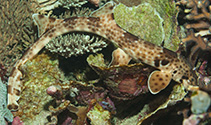
Dorsale stekels (totaal) : 0; Anale stekels: 0. Caudal fin with a pronounced subterminal notch but without a ventral lobe (Ref. 13575). Black spot behind gills small, not in the form of a conspicuous ocellus (Ref. 13575).
Body shape (shape guide): elongated.
A little-known bottom shark, probably common on coral reefs (Ref. 247); tide pools and sea grass beds in 0-12 m (Ref. 90102). Oviparous (Ref. 50449).
Levenscyclus en paargedrag
Maturiteit | Voortplanting | Paaien | Eieren | Fecunditeit | Larven
Oviparous, paired eggs are laid. Embryos feed solely on yolk (Ref. 50449).
Compagno, L.J.V., 1984. FAO Species Catalogue. Vol. 4. Sharks of the world. An annotated and illustrated catalogue of shark species known to date. Part 1 - Hexanchiformes to Lamniformes. FAO Fish. Synop. 125(4/1):1-249. Rome, FAO. (Ref. 247)
Status op de Rode Lijst van het IUCN (Ref. 130435: Version 2025-2 (Global))
Gevaar voor de mens
Harmless
Gebruik door de mens
Visserij: van minder commercieel belang
Tools
Speciale rapporten
Download XML
Internetbronnen
Schattingen op basis van modellen
Gewenste temperatuur (Ref.
123201): 27.9 - 29.1, mean 28.6 °C (based on 14 cells).
Fylogenetische diversiteitsindex (Ref.
82804): PD
50 = 0.5020 [Uniqueness, from 0.5 = low to 2.0 = high].
Bayesian length-weight: a=0.00407 (0.00182 - 0.00914), b=3.09 (2.89 - 3.29), in cm total length, based on LWR estimates for this (Sub)family-body shape (Ref.
93245).
Trofisch niveau (Ref.
69278): 3.4 ±0.3 se; based on size and trophs of closest relatives
Weerstandsvermogen (Ref.
120179): laag, minimale populatieverdubbelingstijd 4,5-14 jaar (Fec assumed to be <100).
Kwetsbaarheid van de visserij (Ref.
59153): Moderate to high vulnerability (49 of 100).
🛈