Élasmobranches (requins et raies) (sharks and rays) >
Orectolobiformes (Carpet sharks) >
Hemiscylliidae (Bamboo sharks)
Etymology: Hemiscyllium: hemi-, from hemisys (Gr.), half, presumably referring to similarity and/ or close affinity to Scyllium (=Scyliorhinus, now in Scyliorhinidae) and/or Chiloscyllium; skylion, Greek for dogfish or small shark (See ETYFish); strahani: In honor of Australian zoologist Ronald Strahan (1922-2010), director of Taronga Zoological Park (Sydney), where holotype lived in captivity (See ETYFish).
Eponymy: Dr Ronald Strahan (1922–2010) was an Australian zoologist, ichthyologist and research scientist who was Director of Taronga Park Zoo, Sydney (1967–1974) when the carpetshark was described; the holotype had been swimming in the zoo’s aquarium since [...] (Ref. 128868), visit book page.
More on author: Whitley.
Environnement : milieu / zone climatique / profondeur / gamme de distribution
Écologie
marin récifal; profondeur 3 - 18 m (Ref. 43278), usually 3 - 13 m (Ref. 43278). Tropical; 5°S - 10°S, 144°E - 153°E
Western Pacific: Papua New Guinea. Also reported from Indonesia (questionable occurrence).
Taille / Poids / Âge
Maturité: Lm ? range ? - ? cm
Max length : 80.0 cm TL mâle / non sexé; (Ref. 106604)
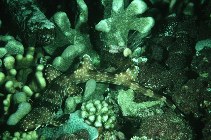
Épines dorsales (Total) : 0; Épines anales: 0. Caudal fin with a pronounced subterminal notch but without a ventral lobe (Ref. 13575). Head and snout with an abrupt black hood; body with conspicuous large white spots (Ref. 13575).
Body shape (shape guide): elongated.
A little-known inshore bottom shark of singular and unique appearance (Ref. 247). Probably found on coral reefs (Ref. 247). Oviparous (Ref. 50449).
Cycle de vie et comportement reproducteur
Maturité | Reproduction | Frai | Œufs | Fécondité | Larves
Oviparous, paired eggs are laid. Embryos feed solely on yolk (Ref. 50449).
Compagno, L.J.V., 1984. FAO Species Catalogue. Vol. 4. Sharks of the world. An annotated and illustrated catalogue of shark species known to date. Part 1 - Hexanchiformes to Lamniformes. FAO Fish. Synop. 125(4/1):1-249. Rome, FAO. (Ref. 247)
Statut dans la liste rouge de l'IUCN (Ref. 130435: Version 2025-2 (Global))
Menace pour l'homme
Harmless
Utilisations par l'homme
Pêcheries: intérêt commercial mineur
Outils
Articles particuliers
Télécharger en XML
Sources Internet
Estimations basées sur des modèles
Indice de diversité phylogénétique (Réf.
82804): PD
50 = 0.5020 [Uniqueness, from 0.5 = low to 2.0 = high].
Bayesian length-weight: a=0.00407 (0.00182 - 0.00914), b=3.09 (2.89 - 3.29), in cm total length, based on LWR estimates for this (Sub)family-body shape (Ref.
93245).
Niveau trophique (Réf.
69278): 3.5 ±0.3 se; based on size and trophs of closest relatives
Résilience (Réf.
120179): Faible, temps minimum de doublement de population : 4,5 à 14 années (Fec assumed to be <100).
Vulnérabilité de la pêche (Ref.
59153): Moderate to high vulnerability (52 of 100).
🛈