Élasmobranches (requins et raies) (sharks and rays) >
Carcharhiniformes (Ground sharks) >
Triakidae (Houndsharks) > Triakinae
Etymology: Mustelus: Latin for weasel, an ancient name for sharks, possibly referring to the pointed snouts, swift movements and/or rapacious feeding behavior of smaller predatory sharks [strictly not tautonymous with Squalus mustelus Linnaeus 1758 since type was designated by the ICZN] (See ETYFish); higmani: In honor of American fisheries biologist James B. Higman (1922-2009), U.S. Fish and Wildlife Service, for his “initial interest in the species and his care in the preparation of excellent notes on its natural history” while serving as an observer on the vessel from which it was collected (See ETYFish).
Eponymy: James Booth Higman (1922–2009) was an American fisheries biologist. [...] (Ref. 128868), visit book page.
Environnement : milieu / zone climatique / profondeur / gamme de distribution
Écologie
marin; saumâtre démersal; profondeur 1 - 900 m (Ref. 55584). Deep-water; 11°N - 36°S
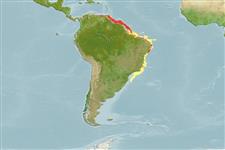
Western Atlantic: northern coast of Venezuela southward to Brazil.
Longueur à la première maturité / Taille / Poids / Âge
Maturité: Lm ?, range 48 - ? cm
Max length : 77.4 cm TL mâle / non sexé; (Ref. 126011); common length : 55.0 cm TL mâle / non sexé; (Ref. 5217); poids max. publié: 1.6 kg (Ref. 126011)
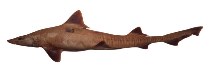
Found on the continental shelf on muddy, sandy and calcareous bottoms. Also occurs in shallow brackish water. Feeds mainly on crustaceans and occasionally on bony fishes, squids, and coelenterates. Viviparous (with yolk-sac placenta), with 1 to 7 young per litter. Catches consisting of mainly adults of one sex suggest at least partial sexual segregation. Utilized for human consumption.
Cycle de vie et comportement reproducteur
Maturité | Reproduction | Frai | Œufs | Fécondité | Larves
Viviparous, with a yolk-sac placenta (Ref. 244).
Compagno, L.J.V., 1984. FAO Species Catalogue. Vol. 4. Sharks of the world. An annotated and illustrated catalogue of shark species known to date. Part 2 - Carcharhiniformes. FAO Fish. Synop. 125(4/2):251-655. Rome: FAO. (Ref. 244)
Statut dans la liste rouge de l'IUCN (Ref. 130435: Version 2025-2 (Global))
Menace pour l'homme
Harmless
Utilisations par l'homme
Pêcheries: commercial
Outils
Articles particuliers
Télécharger en XML
Sources Internet
Estimations basées sur des modèles
Température préférée (Réf.
123201): 9.6 - 24.1, mean 15.4 °C (based on 49 cells).
Indice de diversité phylogénétique (Réf.
82804): PD
50 = 0.5000 [Uniqueness, from 0.5 = low to 2.0 = high].
Bayesian length-weight: a=0.00158 (0.00105 - 0.00239), b=3.14 (3.02 - 3.26), in cm total length, based on LWR estimates for this species & Genus-body shape (Ref.
93245).
Niveau trophique (Réf.
69278): 3.6 ±0.3 se; based on diet studies.
Résilience (Réf.
120179): Très faible, temps minimum de doublement de population supérieur à 14 ans (Fec=1).
Vulnérabilité de la pêche (Ref.
59153): Moderate to high vulnerability (51 of 100).
🛈