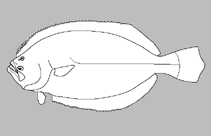
>
Pleuronectiformes (Flatfishes) >
Paralichthyidae (Large-tooth flounders)
Etymology: Pseudorhombus: Greek, pseudes = false + Greek, rhombos = paralelogram (Ref. 45335).
Eponymy: Professor Giorgio Bini (1906–?) was a naturalist, gastronome and birdwatcher who was said to be the foremost authority on Mediterranean fish. [...] (Ref. 128868), visit book page.
Ambiente: milieu / zona climatica / distribuzione batimetrica / gamma di distribuzione
Ecologia
marino demersale. Deep-water
Southeast Pacific: Peru.
Dimensione / Peso / Età
Maturità: Lm ? range ? - ? cm
Ciclo vitale e comportamento di accoppiamento
Maturità | Riproduzione | Deposizione | Uova | Fecondità | Larve
Distinct pairing (Ref. 205).
Chirichigno F., N. and J. Vélez D., 1998. Clave para identificar los peces marinos del Peru (Seguenda edición, revidada y actualizada). Publicación Especial. Callao (Perú): Instituto del Mar del Perú, 496 p. (Ref. 41235)
Stato della Lista Rossa IUCN (Ref. 130435: Version 2025-2 (Global))
Minaccia per l'uomo
Harmless
Usi umani
Strumenti
Rapporti speciali
Scarica XML
Fonti Internet
Stime basate su modelli
Indice di diversità filogenetica (Fonte Biblio.
82804): PD
50 = 0.5000 [Uniqueness, from 0.5 = low to 2.0 = high].
Bayesian length-weight: a=0.00741 (0.00346 - 0.01589), b=3.17 (3.00 - 3.34), in cm total length, based on LWR estimates for this Genus-body shape (Ref.
93245).
Livello trofico (Fonte Biblio.
69278): 3.5 ±0.4 se; based on size and trophs of closest relatives
Resilienza (Fonte Biblio.
120179): Alto, tempo minimo di raddoppiamento della popolazione meno di 15 mesi (Preliminary K or Fecundity.).
Vulnerabilità della pesca (Ref.
59153): Low vulnerability (23 of 100).
🛈