>
Gobiiformes (Gobies) >
Gobiidae (Gobies) > Gobionellinae
Etymology: Chlamydogobius: Greek, chlamys, -idos = cloak, cape + Latin, gobius = gudgeon (Ref. 45335).
More on author: Larson.
Environnement : milieu / zone climatique / profondeur / gamme de distribution
Écologie
; eau douce; saumâtre démersal. Tropical
Oceania: northern Australia.
Taille / Poids / Âge
Maturité: Lm ? range ? - ? cm
Max length : 3.8 cm SL mâle / non sexé; (Ref. 44894)
Description synthétique
Clés d'identification | Morphologie | Morphométrie
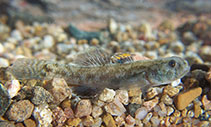
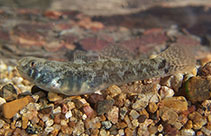
Épines dorsales (Total) : 6 - 7; Rayons mous dorsaux (Total) : 6 - 8; Épines anales: 1; Rayons mous anaux: 5 - 7. Equal number of second dorsal and anal fin rays - consisting of 1 spine and 6 soft rays (Ref. 44894). Color: males blue-grey with dark scale margins and scattered black spots on head and body; first dorsal fin with broad yellow band across outer half; second dorsal and anal fins bluish on basal half, with a black stripe across center of fins and broad white margins; caudal fin dusky blue-grey with faint cross bands. Females mainly tan (Ref. 44894).
Facultative air-breathing in the genus (Ref. 126274); Inhabits muddy creeks draining mangrove samphire plains or freshwater floodplains, also artificial habitats such as water buffalo wallows and concrete drains. Always seen near the coast in low-salinity environments (0-9% sea water). Spawned in captivity. About 30 eggs were laid, which took 9 days to hatch at 25°C. After hatching the young were observed clinging to the walls of the aquarium, apparently feeding on algae (Ref. 44894).
Cycle de vie et comportement reproducteur
Maturité | Reproduction | Frai | Œufs | Fécondité | Larves
Male tends the clutch.
Larson, H.K., 2001. A revision of the gobiid fish genus Mugilogobius (Teleostei: Gobioidei), and its systematic placement. Rec. West. Aust. Mus. (Suppl. No. 62):1-233. (Ref. 43716)
Statut dans la liste rouge de l'IUCN (Ref. 130435: Version 2025-2 (Global))
Menace pour l'homme
Harmless
Utilisations par l'homme
Outils
Articles particuliers
Télécharger en XML
Sources Internet
Estimations basées sur des modèles
Indice de diversité phylogénétique (Réf.
82804): PD
50 = 0.5156 [Uniqueness, from 0.5 = low to 2.0 = high].
Bayesian length-weight: a=0.00708 (0.00332 - 0.01511), b=3.07 (2.89 - 3.25), in cm total length, based on LWR estimates for this (Sub)family-body shape (Ref.
93245).
Niveau trophique (Réf.
69278): 2.9 ±0.4 se; based on size and trophs of closest relatives
Résilience (Réf.
120179): Haut, temps minimum de doublement de population inférieur à 15 mois (Preliminary K or Fecundity.).
Vulnérabilité de la pêche (Ref.
59153): Low vulnerability (10 of 100).
🛈