This website uses cookies to enhance your browsing experience and ensure the functionality of our site. For more detailed information about the types of cookies we use and how we protect your privacy, please visit our Privacy Information page.
×
Cookie Settings
This website uses different types of cookies to enhance your experience. Please select your preferences below:
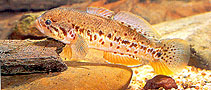
Found in rocky streams flowing through steep-sided valleys. May also be found on mud bottom lowland creeks if the specimen from the Bulloo River, Queensland is identified to be this species. Spawning occurs at temperatures over 20°C. Females lay between 200 and 800 eggs, usually on the underside of a hard object. The male guards the eggs until hatching, which takes about 7 days. Fry are approximately 5 millimeters long and there is no parental care after hatching. A poorly known species (Ref. 44894).
Females lay eggs on underside of hard object; male guard eggs until hatching; fry about 5 mm long at birth; no parental care after hatching (Ref. 44894).
Allen, G.R., S.H. Midgley and M. Allen, 2002. Field guide to the freshwater fishes of Australia. Western Australian Museum, Perth, Western Australia. 394 p. (Ref. 44894)
IUCNのレッドリストの状況は (Ref. 130435: Version 2025-2 (Global))
絶滅危惧 (EN) (B2ab(i,ii,iv)); Date assessed: 13 February 2019
系統多様性指数 (参照 82804): PD50 = 0.5000 [Uniqueness, from 0.5 = low to 2.0 = high].
Bayesian length-weight: a=0.00977 (0.00411 - 0.02324), b=3.08 (2.88 - 3.28), in cm total length, based on LWR estimates for this (Sub)family-body shape (Ref. 93245).
栄養段階 (参照 69278): 3.4 ±0.5 se; based on size and trophs of closest relatives